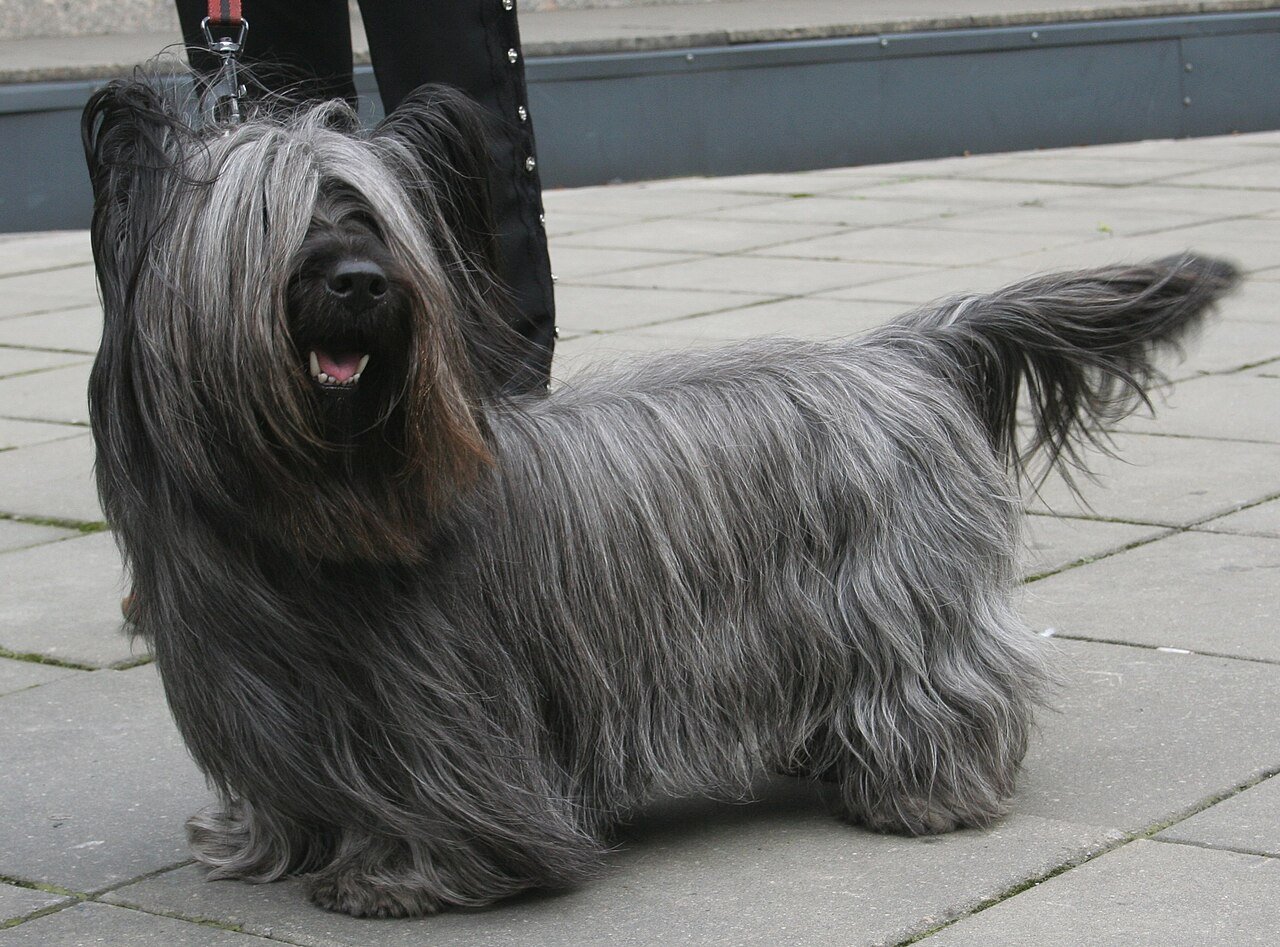
Ranges describe the registry profile, not a measurement, life expectancy, or health prediction for a particular dog. Separate sex or variety ranges are preserved where the source supplies them.
Source characteristics at a glance
The registry uses an ordinal 1–5 scale. A higher number indicates more of the named trait, not a better dog or a compatibility score. These descriptions are general and are not clinical measurements.
History and original work
The Skye Terrier developed on Scotland’s Isle of Skye for practical work against vermin and other quarry. Later popularity with British nobility did not remove its terrier character. The long low body and sweeping coat require suitable household access and consistent gentle care.
Training & behavior
Reward approaching for handling and offer a clear release after a brief successful lesson. Introduce unfamiliar people with space rather than insisting on contact. Teach a calm doorway wait and useful exchanges. Consistent rewards suit a sensitive, determined dog better than repeating a command with increasing force.
Daily needs & enrichment
Offer comfortable walks, searching games, and low-impact play on nonslip footing. Prevent repeated high jumps and excessive stair use, especially during growth. Adapt routes to the long low body and current mobility instead of assuming a short-legged dog needs no regular movement.
Coat care
Brush and comb weekly in layers with a soft or pin brush and long-toothed comb. Reach the soft undercoat beneath the long outer hair, especially at ears, armpits, chest, groin, and legs. Support small tangles while easing them apart rather than pulling against the skin.
Bathe as needed, often around monthly for a maintained coat, smoothing shampoo through instead of scrubbing hair into knots. Rinse fully and dry roots with towels and comfortable airflow. Preserve the natural coat without routine clipping or sculpting. Keep feet and nails practical and avoid scissors under hidden mats or leaving the long underside damp.
Living Environment & Daily Needs
Check household routes and resting arrangements for a Skye's long, low body. Engaging outings and patient lessons can direct terrier determination, while the sweeping coat requires a consistent care schedule.
Practical question
Does the sweeping coat need routine body clipping to stay manageable?
The natural coat can be maintained with layered combing and careful drying. Address knots early and keep practical areas tidy instead of clipping automatically or letting mats accumulate.
Plan care for the individual dog
Budget, time alone and household compatibility depend on the individual dog and your circumstances. Use our care budget guide, time-alone planning guide and questions before adopting alongside the breed-specific source information above.
Health questions for a veterinarian
Disc injury is a documented concern, making secure footing and avoidance of repeated hard landings useful. Sudden back pain, weakness, dragging limbs, or inability to walk needs urgent assessment rather than forced exercise. Ask about family cancer, autoimmune, joint, and skin history without interpreting reports as population frequencies. New persistent lumps, unexplained weight loss, or recurring lameness merits investigation. An absence of mandatory tests on a registry page does not establish freedom from disease.
Editorial update: October 24, 2026. General information; individual care requires veterinary assessment. No veterinary review is claimed. See our Editorial Policy for sourcing and review practices.