Ranges describe the registry profile, not a measurement, life expectancy, or health prediction for a particular dog. Separate sex or variety ranges are preserved where the source supplies them.
Source characteristics at a glance
The registry uses an ordinal 1–5 scale. A higher number indicates more of the named trait, not a better dog or a compatibility score. These descriptions are general and are not clinical measurements.
History and physical characteristics
The Pug developed as a companion dog in China and became established in Europe after dogs were brought west through trading connections. Its long association with close human company is more relevant to everyday care than royal legends or claims about the exact origin of the breed's name.
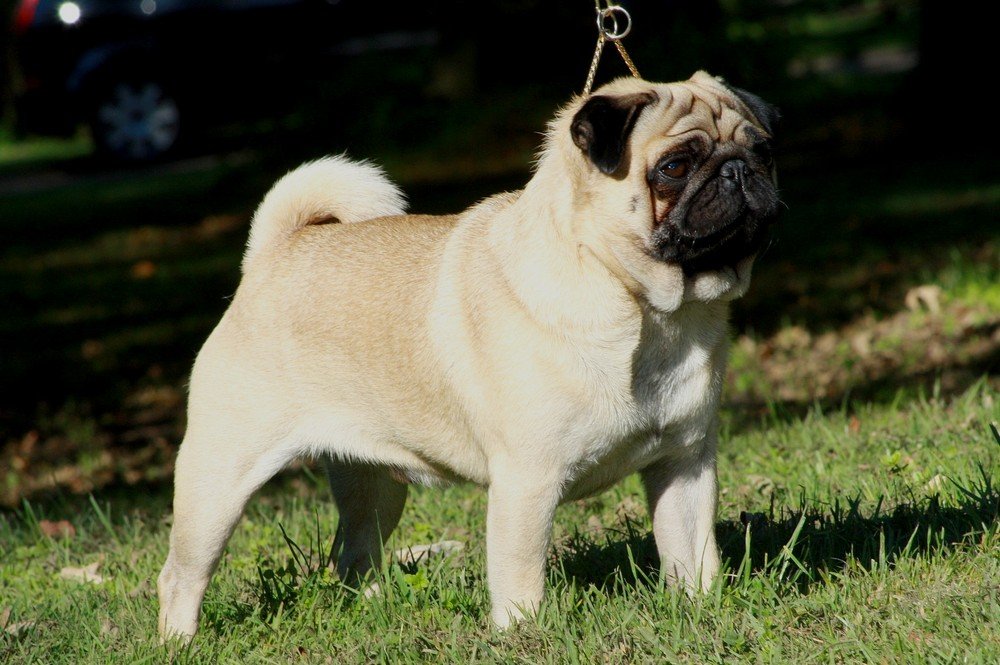
The compact body, curled tail, short muzzle, and prominent eyes are characteristic. Those features deserve functional assessment: easy movement, comfortable breathing, and protected eyes matter more than an exaggerated face or heavier body.
Temperament and training
A Pug's sociability can make small training games enjoyable. Reward calm greetings, breaks from play, and cooperative face and foot handling. Supervise children, and keep lessons comfortable rather than relying on excitement. Account for training food within meals instead of repeatedly adding treats without a plan.
Daily needs & enrichment
Choose gentle walks, small searches, and play with chances to stop before respiratory effort rises. Warm, humid conditions can make activity harder. Work with a veterinarian on a suitable routine and healthy body condition; enthusiasm or a low activity score does not establish what is safe.
Coat care
Brush the short coat weekly with a medium-bristle brush, rubber mitt, or hound glove, adding gentle sessions when shedding increases. Check facial folds and the eye area daily for moisture, debris, or irritation without rubbing the eyes. Ask for an individual fold-care routine and keep cleaned creases dry.
Bathe for actual dirt or odor with dog shampoo, rinse fully, and towel-dry; avoid hot airflow around the face. No routine body clipping is needed. Do not use powders, peroxide, or unprescribed products near the eyes or inside folds, and avoid abrasive shedding tools. Squinting, discharge, a cloudy-looking eye, or pain needs prompt veterinary assessment.
Living Environment & Daily Needs
Build manageable activity, play, and familiar company into a Pug's day, with comfortable rest afterward. Regular brushing and shedding cleanup remain part of home care alongside sensible habits, even with a smooth coat and comic charm.
Care through life stages
Introduce puppies to calm face and foot handling and comfortable breaks in play. Account for training treats within the feeding plan as adults gain weight easily. Reassess breathing, eye comfort, mobility, and sleep in older Pugs; new limitations should not be dismissed as normal snoring or age.
Frequently asked questions
Does a Pug that wants to keep playing know when it is safe to continue? Enthusiasm does not establish respiratory comfort. Stop before breathing effort rises, adjust activity to conditions, and discuss poor recovery or noisy breathing with a veterinarian.
Questions to ask before choosing a dog
How has breathing been assessed during ordinary activity and sleep? Request knee and eye records, relevant PDE/NME risk results, and details of airway or eye procedures. Ask how this Pug recovers after its normal outing.
Plan care for the individual dog
Budget, time alone and household compatibility depend on the individual dog and your circumstances. Use our care budget guide, time-alone planning guide and questions before adopting alongside the breed-specific source information above.
Health questions for a veterinarian
BOAS and heat intolerance are major concerns in this short-faced breed. Ask about an individual airway examination and respiratory functional grading where available. Sleep disruption, persistent noisy breathing, or difficulty with ordinary activity needs assessment; severe respiratory effort, blue or gray gums, or collapse is an emergency. Eye and patellar examinations and hip assessment address different eye and joint concerns, not breathing function.
Pug dog encephalitis, also called necrotizing meningoencephalitis, has a DNA susceptibility test. It estimates risk associated with particular markers and is not a diagnosis or a guarantee against neurological disease. Request the actual result and family history. Seizures or new coordination changes require veterinary assessment rather than interpreting a genetic report at home.
Updated October 25, 2026. General information; see our Editorial Policy for sourcing and review practices.