Ranges describe the registry profile, not a measurement, life expectancy, or health prediction for a particular dog. Separate sex or variety ranges are preserved where the source supplies them.
Source characteristics at a glance
The registry uses an ordinal 1–5 scale. A higher number indicates more of the named trait, not a better dog or a compatibility score. These descriptions are general and are not clinical measurements.
History and original work
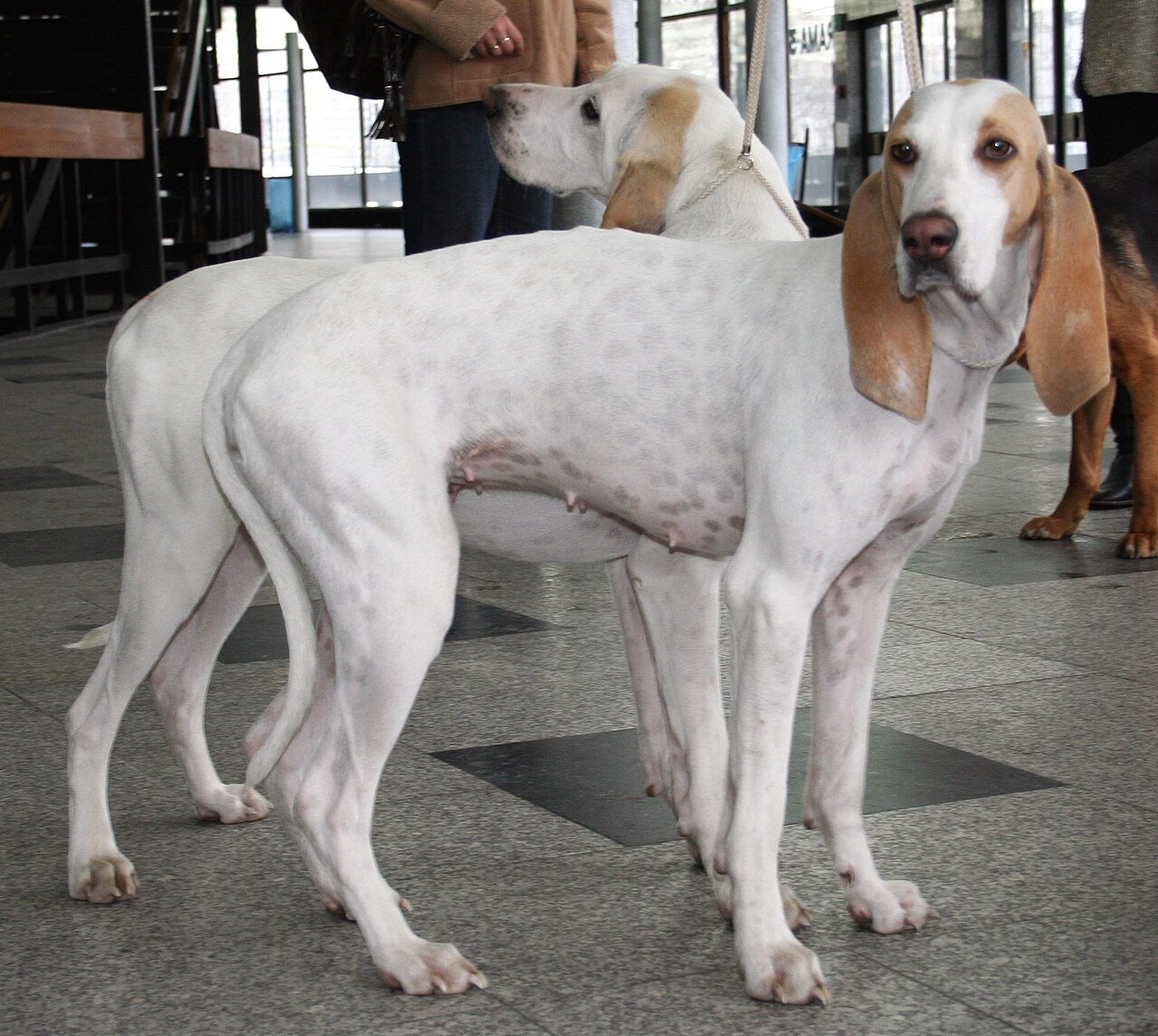
The Porcelaine is a French scent hound associated with the Franche-Comte region. Its pale coat and fine outline accompany a working tracker. Reconstruction and preservation of the breed do not make every detail of its earlier ancestry certain.
Training & behavior
Rehearse a rewarded check-in before releasing the dog to follow a scent. Practice waiting at gates and a comfortable settle after an outing. Introduce other dogs with space and supervision instead of assuming pack ancestry guarantees compatibility. Manage food and resting places so dogs are not pushed into competition.
Daily needs & enrichment
Provide scent trails, varied walks, and gradually conditioned hikes on suitable terrain. A long line and secure boundaries keep a focused nose from leading into roads or wildlife. Break demanding searches with recovery and check feet after rough cover rather than working through discomfort.
Coat care
Use a soft-bristle brush or hound glove weekly over the close fine coat. Check pale skin through the hair at the belly, toes, and harness contact points, and lift the long ear flaps to inspect for irritation. Remove surface debris gently instead of scraping with a harsh shedding blade.
Bathe for substantial dirt with dog shampoo, rinse completely, and towel-dry. Dry the outer ear folds after wet activity without pouring cleanser or water into the canals. The natural outline needs no routine body trim. Persistent odor, discharge, or repeated scratching calls for assessment rather than more frequent perfumed baths.
Living Environment & Daily Needs
Arrange secure scent exploration and purposeful activity for a Porcelaine, with patient training around interesting trails. Familiar participation and comfortable rest belong beside dependable boundaries that prevent an outing becoming an unplanned departure.
Practical question
Does pack-hound ancestry mean every Porcelaine will share food happily?
No. Compatibility varies. Feed with comfortable separation, supervise introductions, and reward calm behavior without testing a dog by taking its bowl away.
Plan care for the individual dog
Budget, time alone and household compatibility depend on the individual dog and your circumstances. Use our care budget guide, time-alone planning guide and questions before adopting alongside the breed-specific source information above.
Health questions for a veterinarian
Breed-wide clinical evidence and standardized screening guidance are limited. Ask for documented family health and discuss examinations appropriate to the individual instead of assigning disease risks solely from body size. Long ear flaps make regular inspection useful, but repeated inflammation needs its cause investigated. A persistent limp, painful ear, unexplained weight change, or reduced stamina deserves examination. Neither a sparse disease list nor a broad commercial DNA panel establishes freedom from inherited problems.
Editorial update: October 24, 2026. General information; individual care requires veterinary assessment. No veterinary review is claimed. See our Editorial Policy for sourcing and review practices.