Ranges describe the registry profile, not a measurement, life expectancy, or health prediction for a particular dog. Separate sex or variety ranges are preserved where the source supplies them.
Source characteristics at a glance
The registry uses an ordinal 1–5 scale. A higher number indicates more of the named trait, not a better dog or a compatibility score. These descriptions are general and are not clinical measurements.
History and original work
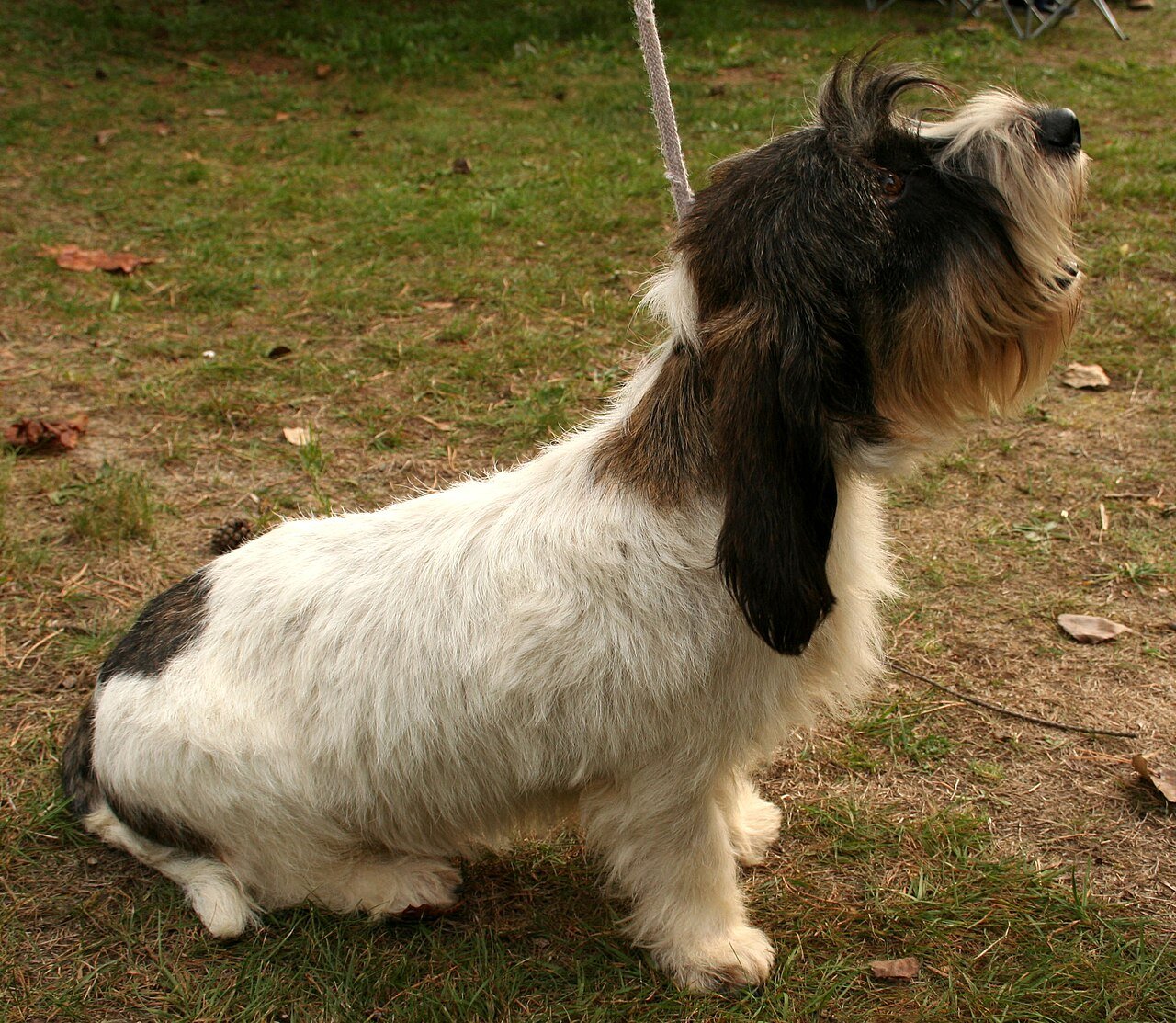
The Petit Basset Griffon Vendéen developed among the rough-coated hunting hounds of the Vendée in France. It is a distinct breed from the Grand, with a compact working outline and persistent scent interest. The tousled coat is natural, but it still requires thorough care.
Training & behavior
Use the chance to resume sniffing as a reward for returning attention. Teach a clear finish to a short trail and reinforce quiet rest after it. Manage gates and digging routes carefully. Social engagement and a carrying voice should be guided without assuming the dog is deliberately ignoring a person to be difficult.
Daily needs & enrichment
Offer purposeful scent walks and progressively conditioned hikes, using secure boundaries for freedom. Include mental searches and recovery instead of only adding mileage. Adjust for age and joint comfort. A persistent hound may continue investigating after a sensible outing should have ended.
Coat care
Brush the thick harsh coat at least weekly and follow with a comb that reaches through the hair. Check beard, ear bases, chest, belly, legs, and feet for seeds or developing tangles. Preserve the natural tousled outline; trimming should be limited rather than turning the dog into a sculpted terrier.
Bathe for accumulated dirt, rinse dog shampoo thoroughly, and dry the beard, ears, and roots with towels and gentle airflow. Avoid scissors under mats, excessive coat softening, and leaving wet furnishings against skin. A rough appearance should not conceal packed hair or an irritated ear.
Living Environment & Daily Needs
Provide a PBGV active sniffing outings and recall practice within secure boundaries. Its substantial voice and pack-hound sociability should inform household company and neighborhood expectations, with comfortable rest afterward.
Practical question
Does a naturally scruffy coat mean a comb should stop at tangles?
No. The maintained coat should allow a gentle comb-through; resistant areas need safe attention rather than being left to felt against the skin.
Plan care for the individual dog
Budget, time alone and household compatibility depend on the individual dog and your circumstances. Use our care budget guide, time-alone planning guide and questions before adopting alongside the breed-specific source information above.
Health questions for a veterinarian
A specific primary open-angle glaucoma DNA test and clinical eye examinations are documented priorities. The test addresses an inherited form, while examination can identify other eye findings; a clear result does not make eye pain safe to ignore. Neck pain syndrome and orthopedic concerns have also been reported. A painful eye or sudden visual change needs urgent assessment, and persistent neck stiffness, fever, or limping needs examination rather than being attributed to ordinary hunting enthusiasm.
Editorial update: October 24, 2026. General information; individual care requires veterinary assessment. No veterinary review is claimed. See our Editorial Policy for sourcing and review practices.