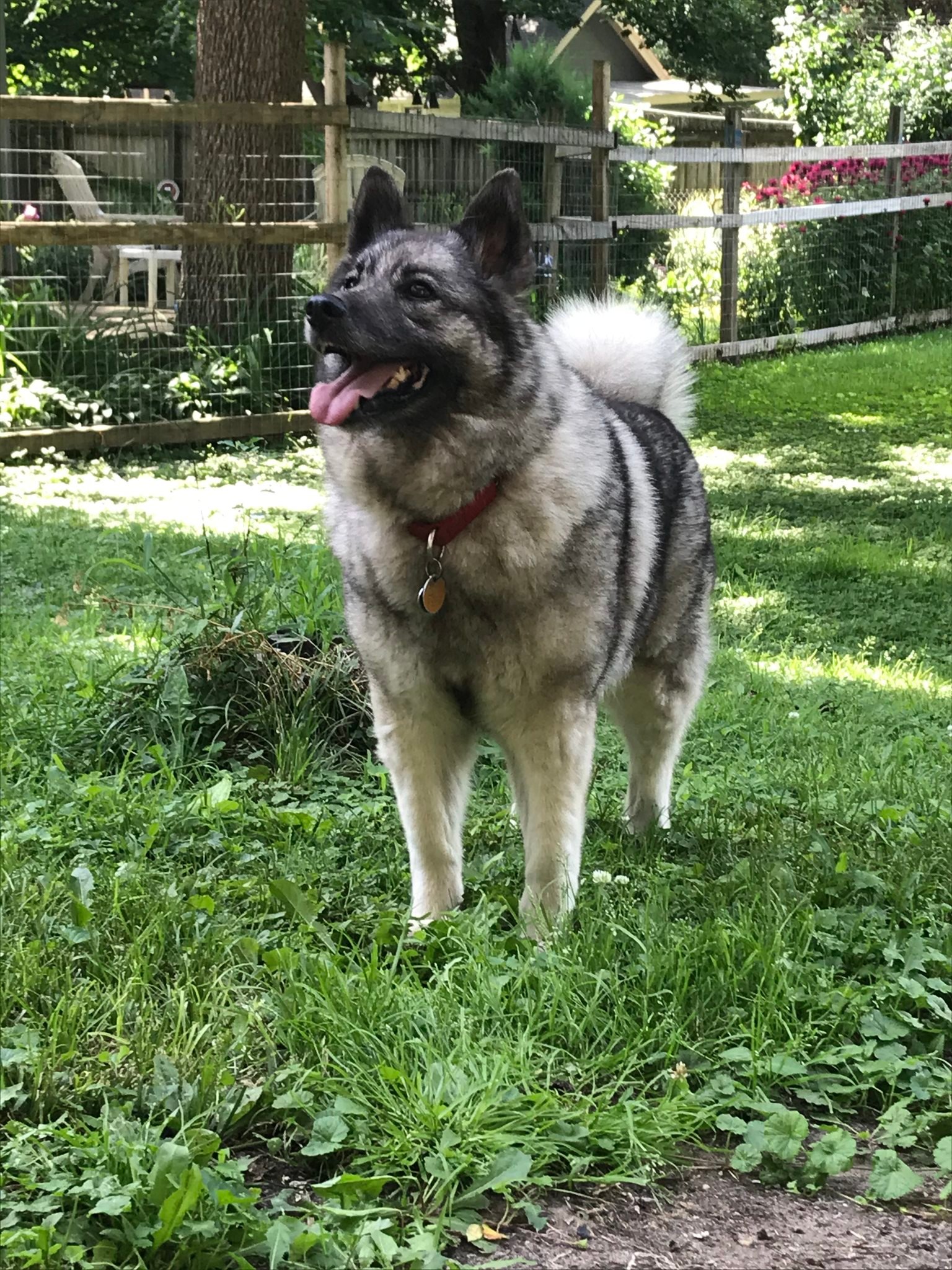
Ranges describe the registry profile, not a measurement, life expectancy, or health prediction for a particular dog. Separate sex or variety ranges are preserved where the source supplies them.
Source characteristics at a glance
The registry uses an ordinal 1–5 scale. A higher number indicates more of the named trait, not a better dog or a compatibility score. These descriptions are general and are not clinical measurements.
History and original work
The Norwegian Elkhound developed in Norway as a hunter of large game, especially moose. Locating quarry, following a trail, and using voice required independent decisions. The established working tradition is more certain than precise claims of an unchanged pedigree stretching thousands of years into the past.
Training & behavior
Reward a brief pause after an alert and teach coming away from the boundary. Use short scent problems and change the lesson once it is understood. Practice recall within an enclosure; do not test it by releasing a hunting dog beside wildlife.
Daily needs & enrichment
Provide exploring walks, laid scent trails, and progressively conditioned hikes. Keep a secure line or boundary when the nose wants to travel. Adapt distance and terrain to recovery and age. A dog bred to range still needs deliberate rests and a practical return to household calm.
Coat care
Brief daily brushing with a slicker or pin brush and comb helps reach the thick undercoat beneath the harsh gray outer hair. Work small lifted sections around the neck, thighs, tail base, and behind ears. Add gentle brushing during a heavy shed without repeatedly scraping skin or pulling attached wool.
Bathe when soiled or to release loose coat, rinse dog shampoo completely, and dry the dense roots with towels and cool airflow. No routine body trim is needed. Avoid treating a dry surface as proof the undercoat is dry or replacing a skin assessment with repeated washing for persistent odor.
Living Environment & Daily Needs
Give an Elkhound varied outings and consistent guidance around wildlife interest. Its vocal alerts and coat care should inform household and neighborhood planning, alongside comfortable rest for the individual.
Practical question
Can a dog that knows recall safely explore an open woodland alone?
Hunting interest can override familiar responses. Use secure management and structured scent work rather than making freedom a test of obedience.
Plan care for the individual dog
Budget, time alone and household compatibility depend on the individual dog and your circumstances. Use our care budget guide, time-alone planning guide and questions before adopting alongside the breed-specific source information above.
Health questions for a veterinarian
Hip imaging and repeated ophthalmologist examinations are documented club recommendations. Retinal disease and kidney concerns have been reported; a reassuring family account or normal past result does not exclude every later problem. New night-vision difficulty, increased thirst or urination, persistent lameness, or unexplained weight loss needs examination. Request actual reports and family history rather than relying on claims that a disorder has disappeared or only affects dogs from elsewhere.
Editorial update: October 26, 2026. General information; individual care requires veterinary assessment. No veterinary review is claimed. See our Editorial Policy for sourcing and review practices.