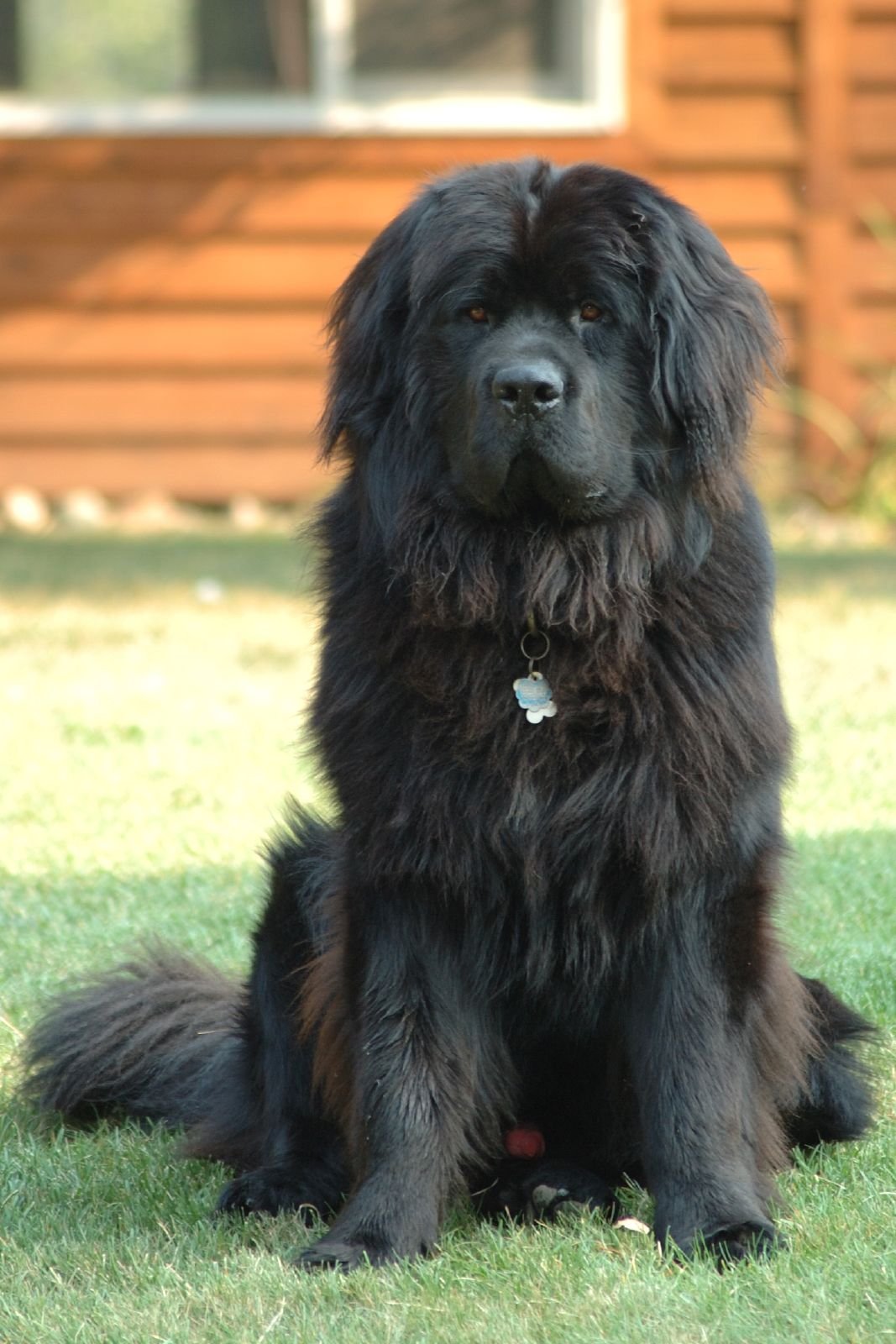
Ranges describe the registry profile, not a measurement, life expectancy, or health prediction for a particular dog. Separate sex or variety ranges are preserved where the source supplies them.
Source characteristics at a glance
The registry uses an ordinal 1–5 scale. A higher number indicates more of the named trait, not a better dog or a compatibility score. These descriptions are general and are not clinical measurements.
History and original work
The Newfoundland developed in Canada as a powerful working dog associated with fishing, hauling, and water assistance. Its swimming history does not make every individual a trained rescuer. Size, coat, physical conditioning, and cooperative handling remain practical responsibilities in a family setting.
Training & behavior
Teach a slack leash, waiting at doors, and standing calmly for grooming while the dog is still easy to handle. Reward four feet on the floor around children. Practice equipment fitting and vehicle loading gradually. Affectionate behavior does not prevent accidental injury from a powerful body.
Daily needs & enrichment
Offer steady walks, searching games, and carefully introduced swimming with an easy exit and supervision. Water work needs conditioning and breaks, not a test of rescue instincts. Delay loaded draft work until maturity and appropriate preparation. Protect growing joints and adjust effort in warm conditions.
Coat care
Use a slicker and long-toothed comb at least weekly through lifted layers of the heavy coat. Check behind ears, under elbows, chest, belly, trousers, and tail; add gentle daily sessions during heavy shedding. Work patiently to reach retained wool without dragging tools against skin.
After swimming, rinse contaminants and dry the dense undercoat as well as the surface. For a bath, rinse dog shampoo completely and use towels and cool airflow to the roots. Keep feet and sanitary areas manageable with limited tidying. Avoid routine body shaving, hot drying, or leaving large damp mats beneath dry guard hair.
Living Environment & Daily Needs
Check generous rest, household routes, and transport for a Newfoundland's powerful body. Comfortable leash habits, thoughtful introductions, and regular activity should accompany thick-coat care, especially after wet outings.
Practical question
Is a willingness to enter water proof of rescue ability?
No. Use supervised, conditioned activity and appropriate instruction; never put a person in danger to test a dog’s instincts.
Plan care for the individual dog
Budget, time alone and household compatibility depend on the individual dog and your circumstances. Use our care budget guide, time-alone planning guide and questions before adopting alongside the breed-specific source information above.
Health questions for a veterinarian
Hip and elbow imaging, cardiologist assessment, and cystinuria DNA testing are documented priorities. Cardiac evaluation can identify concerns such as subvalvular aortic stenosis, while cystinuria can lead to urinary stones; the tests answer different questions. A normal examination does not guarantee every later cardiac outcome. Straining with little urine, fainting, or unusual exercise intolerance needs prompt assessment, with collapse or obstruction treated urgently. Keep growth and activity plans appropriate to the individual rather than relying on sheer size.
Editorial update: October 26, 2026. General information; individual care requires veterinary assessment. No veterinary review is claimed. See our Editorial Policy for sourcing and review practices.