Ranges describe the registry profile, not a measurement, life expectancy, or health prediction for a particular dog. Separate sex or variety ranges are preserved where the source supplies them.
Source characteristics at a glance
The registry uses an ordinal 1–5 scale. A higher number indicates more of the named trait, not a better dog or a compatibility score. These descriptions are general and are not clinical measurements.
History and original work
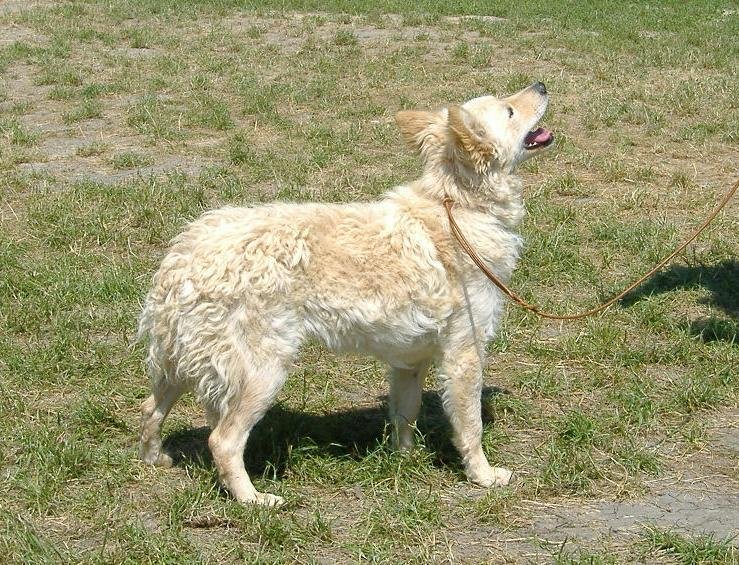
The Mudi developed in Hungary as a versatile farm and herding dog. Separate organized breeding took shape in the twentieth century alongside other Hungarian herders. Smooth hair on the face and fronts of legs contrasts with wavy or curly body hair, which is normally kept natural.
Training & behavior
Teach a pause after an alert and moving to a station while people pass. Prevent chasing of children and pets with barriers during learning. Alternate short obedience with scent tasks, and reward resting after work. A fast worker needs clarity before speed is added.
Daily needs & enrichment
Use tracking, rally, herding foundations, and progressively conditioned runs or hikes. Add jumps cautiously with maturity and suitable surfaces. Provide a permitted digging or searching task, and inspect enclosure security. A capable jumper can find a route out if obstacles near fencing make it easier.
Coat care
Comb or lightly brush the wavy body coat to remove loose hair and debris, checking behind ears, armpits, trousers, and collar contact points. The smooth face needs gentler attention than longer body areas. Increase checks during shedding while preserving the natural wave or curl.
Bathe when dirty, rinse dog shampoo completely, and dry to the roots with towels and cool airflow. Routine sculpting or body shaving is unnecessary. Avoid aggressive fluff-brushing, scraping the skin for extra loose hair, or leaving damp knots beneath an apparently tidy surface.
Living Environment & Daily Needs
Give a Mudi purposeful activity and useful lessons that engage its agile working mind. Plan guidance around alert, sometimes vocal responses at home, and include recovery time rather than relying on a simple coat to predict easy care.
Practical question
Should every curl be brushed straight to make grooming easier?
Preserve the natural coat. Remove loose hair and tangles gently, checking roots without imposing a sculpted or fluffed outline.
Plan care for the individual dog
Budget, time alone and household compatibility depend on the individual dog and your circumstances. Use our care budget guide, time-alone planning guide and questions before adopting alongside the breed-specific source information above.
Health questions for a veterinarian
Hip, elbow, patellar, eye, and cardiac evaluations are documented club priorities. Each examines a different structure, and an earlier normal result does not exclude all later disease. MDR1 testing can inform medication decisions where appropriate; it is not a general neurological or cardiac clearance. Request dated reports and family history. Persistent lameness, altered vision, fainting, or unusual recovery after medication deserves investigation rather than being assumed part of an energetic temperament.
Editorial update: October 24, 2026. General information; individual care requires veterinary assessment. No veterinary review is claimed. See our Editorial Policy for sourcing and review practices.