Ranges describe the registry profile, not a measurement, life expectancy, or health prediction for a particular dog. Separate sex or variety ranges are preserved where the source supplies them.
Source characteristics at a glance
The registry uses an ordinal 1–5 scale. A higher number indicates more of the named trait, not a better dog or a compatibility score. These descriptions are general and are not clinical measurements.
History and original work
The Kuvasz became established in Hungary as a livestock guardian and also found a place in royal households. Accounts of much earlier Asian ancestry are less certain. Watching over sheep with considerable independence differs from herding them on command, which helps explain why repetitive obedience drills may not hold the dog's interest.
Temperament and training
Use a brief task with an obvious outcome, such as returning to a station so a gate can open, and reward cooperation. Build trust through handling the dog can predict rather than overpowering it. A slowly maturing guardian needs continued social experience as it grows. Plan supervised contact with children and controlled visitor introductions; devotion to family is not a universal welcome.
Daily needs & enrichment
Choose walks with room to investigate, then add a short search and a relaxed finish. Rotate tasks rather than repeatedly drilling the same retrieve. If livestock work is intended, arrange experienced supervision and appropriate stock introductions. Match rough terrain and endurance to the individual instead of using a guardian's traditional workload as an automatic exercise prescription.
Coat care
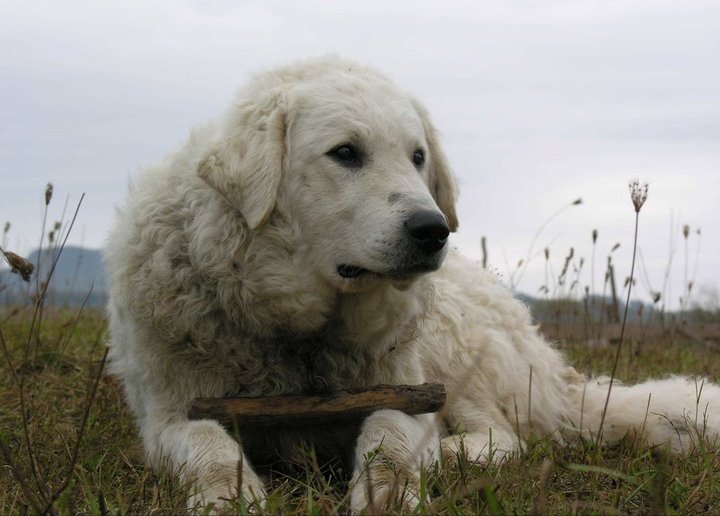
Brush through the white double coat, separating the outer hair to remove loose undercoat and check the skin. Pay extra attention during seasonal shedding and around ears and rear feathering. Do not judge maintenance by color alone or scrape the skin to remove every loose hair at once. Make foot handling and examination familiar before they are urgently needed.
Use a suitable brush and comb at least weekly, increasing attention during shedding. Bathe occasionally for dirt, rinse fully, and dry the undercoat with comfortable airflow. Avoid routine body shaving and hot drying.
Living Environment & Daily Needs
For a Kuvasz, organize arrivals and visitor introductions carefully around independent guardian judgment. Check full-sized rest and safe handling routes, with calm guidance and brushing incorporated into familiar household routines.
Care through life stages
Puppies need cooperative examination and neutral social experiences as guardian behavior develops. Adults benefit from varied purposeful tasks rather than constant drills. Seniors may need easier access and shorter grooming sessions; persistent lethargy, stiffness, or eye changes need assessment.
Frequently asked questions
Does a CHIC number mean all Kuvasz screening results were normal? No. It records completion and disclosure. Read the named reports and discuss additional tests and family history rather than accepting the number as a health guarantee.
Questions to ask before choosing a dog
Can you show hip, elbow and thyroid reports and explain any eye or PRA testing? Ask about bloat and longevity in relatives. How does the dog respond when asked to leave a boundary, when a guest enters, or when grooming reaches a sensitive area?
Plan care for the individual dog
Budget, time alone and household compatibility depend on the individual dog and your circumstances. Use our care budget guide, time-alone planning guide and questions before adopting alongside the breed-specific source information above.
Health questions for a veterinarian
Kuvasz club guidance includes hips, elbows and autoimmune-thyroiditis evaluation, with eye examination, PRA DNA and other checks discussed as additional options. Ask which tests were performed and what the results show, rather than treating a CHIC number as proof of normal findings. Persistent lethargy, coat changes or stiffness needs clinical assessment; a symptom cannot identify thyroid disease or dysplasia on its own. The registry also identifies bloat as a concern, so arrange an emergency plan and discuss individual prevention with the veterinarian.
Updated October 25, 2026. General information; see our Editorial Policy for sourcing and review practices.