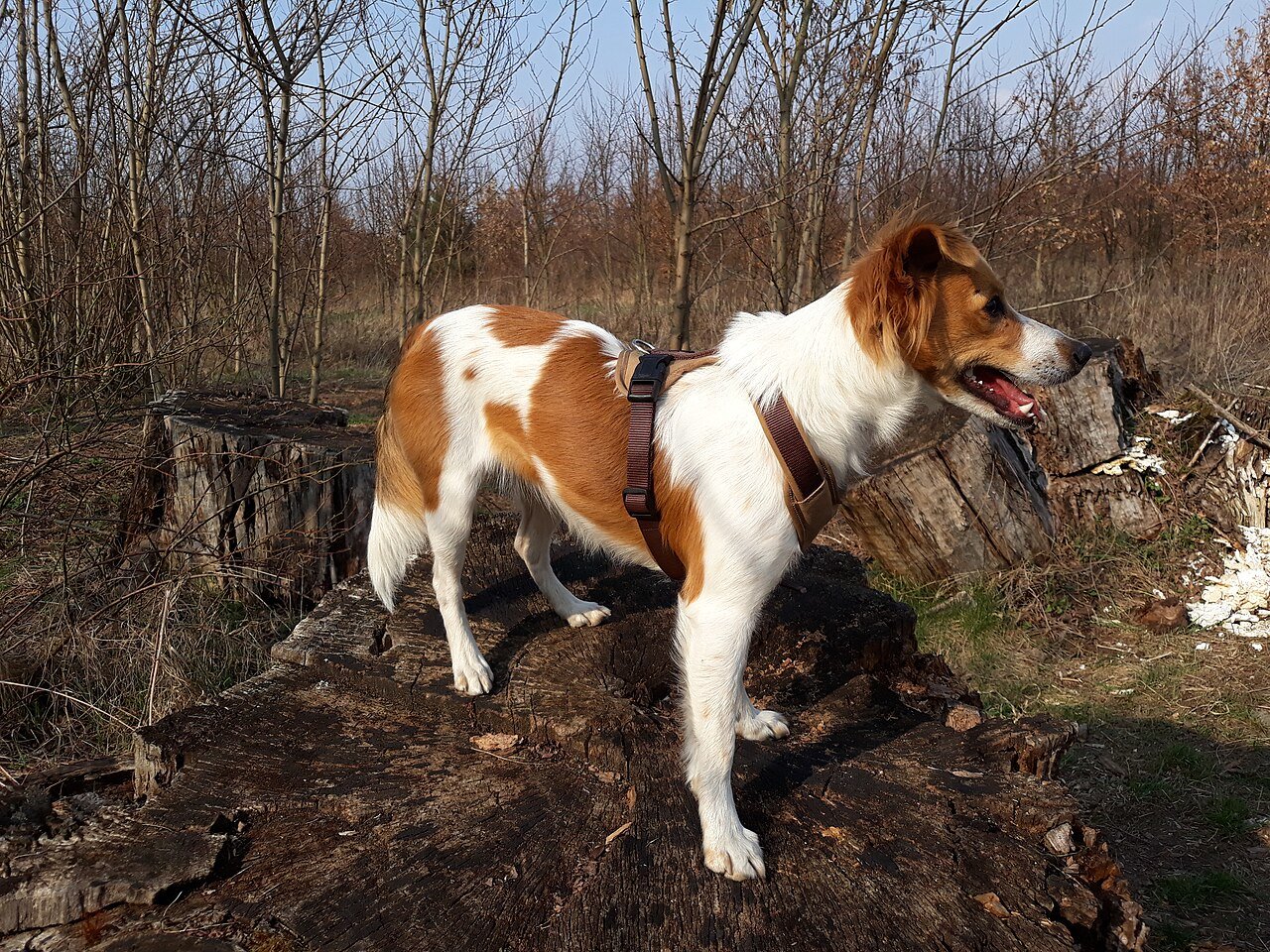
Ranges describe the registry profile, not a measurement, life expectancy, or health prediction for a particular dog. Separate sex or variety ranges are preserved where the source supplies them.
Source characteristics at a glance
The registry uses an ordinal 1–5 scale. A higher number indicates more of the named trait, not a better dog or a compatibility score. These descriptions are general and are not clinical measurements.
History and original work
The Kromfohrlander was developed in Germany in the twentieth century around the breeding work of Ilse Schleifenbaum near Siegen. It is primarily a companion breed, with rough and smooth coat varieties. A beard belongs to the rough variety; the smooth variety has different furnishings rather than simply being an untrimmed version.
Training & behavior
Reward voluntary approaches and let unfamiliar people remain at a comfortable distance. Teach short periods of resting away from constant contact, using gradual steps. Introduce handling and nail care through brief cooperative sessions. Sensitivity calls for clear rewards and predictability rather than repeated pressure.
Daily needs & enrichment
Use relaxed exploring walks, small retrieves, and easy scent problems with a familiar caregiver. Add obstacles only with suitable development and footing. Vary the setting without overwhelming the dog with crowded greetings, and make recovery part of the outing.
Coat care
Identify the variety before choosing tools: rough coats benefit from brushing and combing through the beard and furnishings, with skilled removal of ready dead hair when appropriate. Smooth coats need attention to ear fringes, chest, tail, and leg feathering. A weekly root-level check helps find tangles before they tighten.
Bathe when dirty, rinse dog shampoo carefully, and dry friction areas with towels and cool airflow. Do not apply a stripping routine indiscriminately to smooth furnishings or close-clip a rough coat simply to avoid maintenance. Never pull unready hair or cut a mat against unseen skin; keep handling sessions comfortable and brief.
Living Environment & Daily Needs
A Kromfohrlander needs regular walks and shared games within a close household relationship. Gentle teaching and quiet recovery suit the sensitive companion described here; relatively simple coat care should not reduce daily involvement.
Practical question
Can both coat varieties receive the same stripping routine?
No. Check whether the coat is rough with a beard or smooth with feathering, then maintain its actual texture and growth pattern.
Plan care for the individual dog
Budget, time alone and household compatibility depend on the individual dog and your circumstances. Use our care budget guide, time-alone planning guide and questions before adopting alongside the breed-specific source information above.
Health questions for a veterinarian
Specific tests are available for hereditary footpad hyperkeratosis and von Willebrand disease. Cracked thickened pads can be painful, and abnormal bleeding needs prompt investigation; the two tests address different inherited conditions. Autoimmune problems have also been reported and are not excluded by a clear result for either variant. The small population makes family records valuable, but selected samples do not establish a reliable population prevalence. Persistent skin, gait, or bleeding changes deserve assessment.
Editorial update: October 24, 2026. General information; individual care requires veterinary assessment. No veterinary review is claimed. See our Editorial Policy for sourcing and review practices.