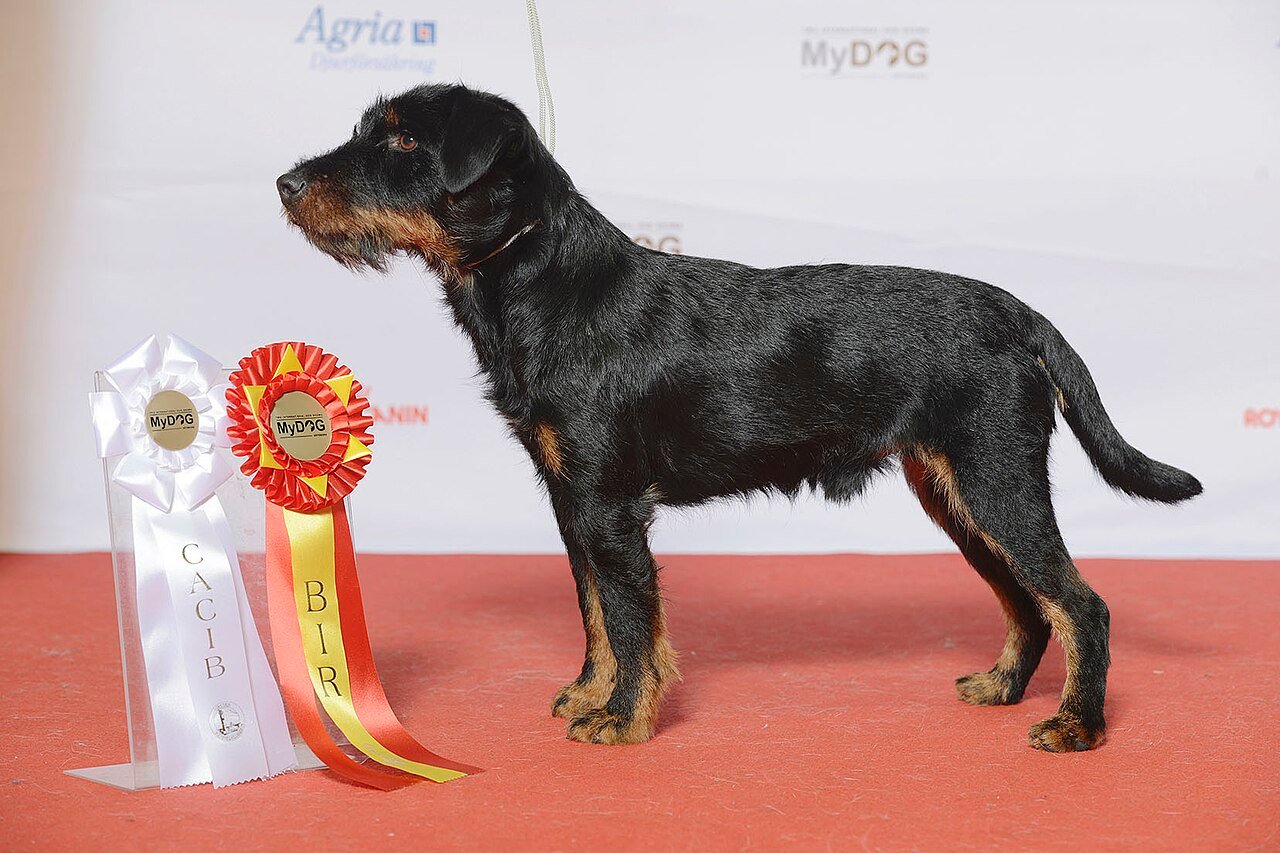
Ranges describe the registry profile, not a measurement, life expectancy, or health prediction for a particular dog. Separate sex or variety ranges are preserved where the source supplies them.
Source characteristics at a glance
The registry uses an ordinal 1–5 scale. A higher number indicates more of the named trait, not a better dog or a compatibility score. These descriptions are general and are not clinical measurements.
History and original work
The Jagdterrier was developed in Germany after the First World War by hunters selecting a versatile working terrier. Underground hunting, flushing, and other game work shaped its persistence. Its modest size and straightforward coat should not obscure the intensity of that original purpose.
Training & behavior
Teach a trade, a stop, and turning away from distractions within secure boundaries before increasing difficulty. Use controlled searching as a reward for checking in. Keep small pets physically protected and prevent access to active wildlife dens. Clear management is essential; persistence is not safely addressed by simply repeating louder commands.
Daily needs & enrichment
Provide demanding but progressively conditioned tracking and searching tasks, alongside controlled walks and skill work. Use contained outlets for digging rather than unsupervised roaming. Protect growing joints from repeated impact, and inspect the dog after rough ground. A short casual outing alone may leave a working terrier with little useful engagement.
Coat care
Smooth and rough coats both need a weekly brush, with a comb through denser rough areas and any beard. Inspect the belly, feet, and skin after cover work for debris, ticks, or abrasions. Preserve the close functional jacket rather than applying an elaborate trim from an unrelated terrier breed.
Bathe when genuinely dirty, rinse dog shampoo well, and towel-dry, checking rougher roots for remaining moisture. Routine body shaving is unnecessary; limited ready dead-hair removal may suit a rough coat with appropriate instruction. Avoid pulling attached hair or scrubbing wounds as if they were ordinary mud. Check nails and pads as part of the working routine.
Living Environment & Daily Needs
A Jagdterrier's home plan needs meaningful tasks and clear direction for persistent hunting drive. Secure exploration and reliable boundaries matter more than a straightforward coat-care routine or a lively terrier appearance.
Practical question
Can a normal PLL DNA result justify waiting on a painful eye?
No. Trauma and other eye diseases remain possible, and pain, cloudiness, or sudden visual difficulty needs urgent examination.
Plan care for the individual dog
Budget, time alone and household compatibility depend on the individual dog and your circumstances. Use our care budget guide, time-alone planning guide and questions before adopting alongside the breed-specific source information above.
Health questions for a veterinarian
Primary lens luxation is a documented inherited eye concern, and a specific ADAMTS17 DNA test is available. Lens displacement can cause painful pressure changes and loss of sight. A clear result addresses that variant rather than every eye condition or a traumatic lens injury. Seek urgent assessment for a red, cloudy, painful eye or sudden vision change. Reliable breed-wide frequencies are limited; request family records and actual test reports instead of inferring prevalence from tested dogs.
Editorial update: October 24, 2026. General information; individual care requires veterinary assessment. No veterinary review is claimed. See our Editorial Policy for sourcing and review practices.