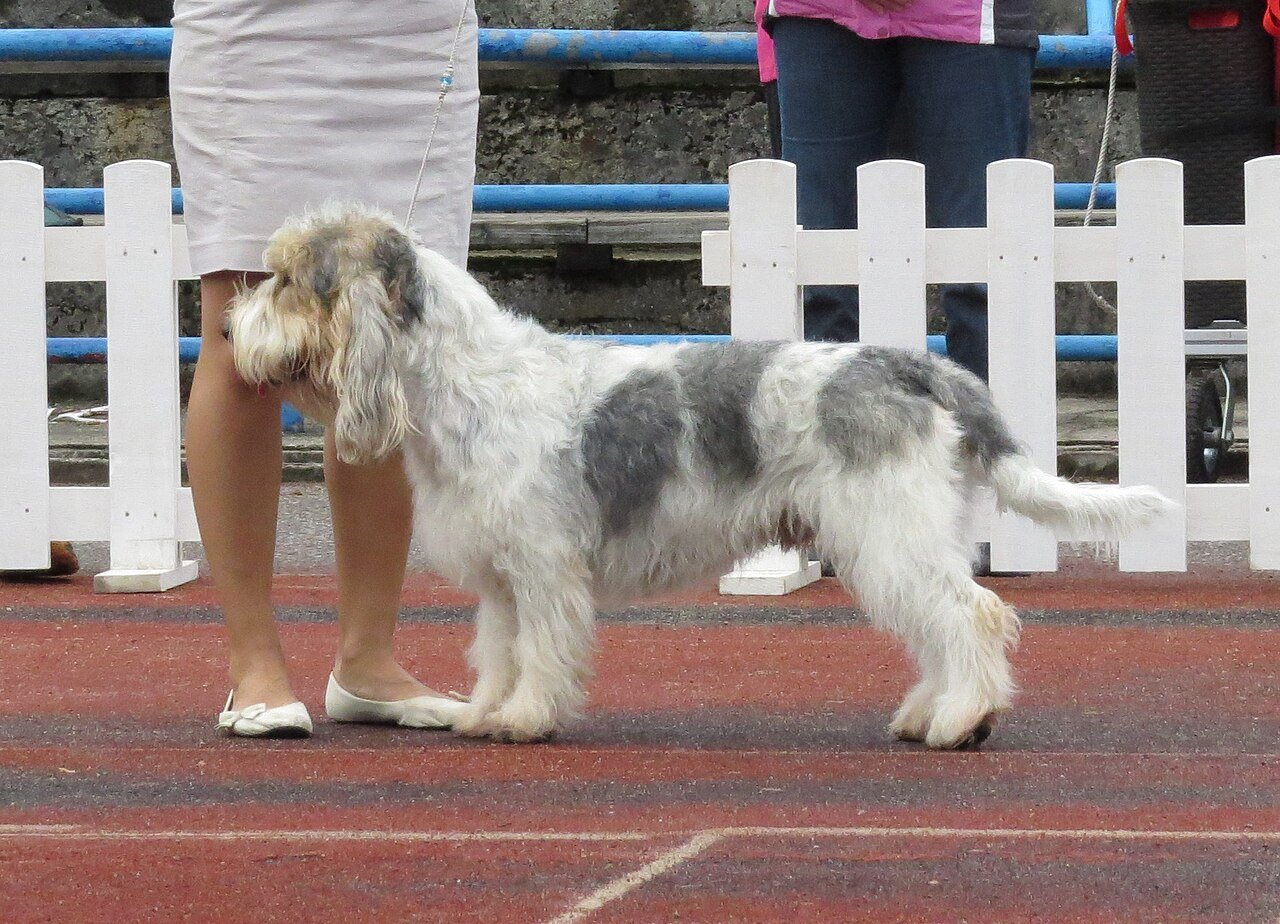
Ranges describe the registry profile, not a measurement, life expectancy, or health prediction for a particular dog. Separate sex or variety ranges are preserved where the source supplies them.
Source characteristics at a glance
The registry uses an ordinal 1–5 scale. A higher number indicates more of the named trait, not a better dog or a compatibility score. These descriptions are general and are not clinical measurements.
History and original work
The Grand Basset Griffon Vendéen developed among the rough-coated scent hounds of the Vendée in France. Its longer-legged basset outline supported hunting over difficult country, commonly in company with other hounds. It is a distinct breed from the Petit, despite their shared history and similar coat.
Training & behavior
Reward a turn toward you before the nose becomes completely absorbed. Practice short scent trails with a clear beginning and finish, then teach quiet rest after the task. Use gates and a leash around exits. Patient repetition and useful rewards work better than interpreting independent scent decisions as a challenge to authority.
Daily needs & enrichment
Provide purposeful sniffing walks and gradually conditioned hikes rather than assuming short legs mean little stamina. Check fencing at ground level and prevent digging under boundaries. Adjust outings for age and comfort; an older hound still needs engagement, but persistence is not proof that joints or endurance are unchanged.
Coat care
A weekly slicker brush followed by a metal comb reaches through the rough coat and furnishings. Check the beard, low chest, belly, ear bases, and feet after brushy trails. Remove seeds before they tighten into mats, taking care not to pull the skin of the long ears.
Bathe when soiled, rinse dog shampoo out thoroughly, and dry the beard, ears, and underside with towels and cool airflow. Preserve the natural rough outline; limited dead-hair removal or foot tidying may be appropriate, but routine close body clipping is unnecessary. Avoid treating recurring ear discharge as ordinary outdoor dirt.
Living Environment & Daily Needs
A Grand Basset needs secure walking habits and meaningful sniffing opportunities. Consider its carrying voice around the household and neighbors, and plan patient teaching and comfortable rest alongside an endurance-minded scent routine.
Practical question
Is this simply a larger Petit Basset with identical needs?
No. Treat it as a distinct breed and assess the individual’s endurance, behavior, and health rather than scaling another dog’s routine by height.
Plan care for the individual dog
Budget, time alone and household compatibility depend on the individual dog and your circumstances. Use our care budget guide, time-alone planning guide and questions before adopting alongside the breed-specific source information above.
Health questions for a veterinarian
Hip evaluation and ophthalmologist examination are documented breeding priorities. Joint imaging and an eye clearance describe specific findings at a particular time; neither rules out every inherited or later condition. Some breeding programs also assess patellas, heart, or thyroid, so request the actual reports and their interpretation rather than a blanket claim of testing. Reliable breed-wide frequencies are limited. Persistent lameness, squinting, reduced vision, or recurrent painful ears needs assessment.
Editorial update: October 24, 2026. General information; individual care requires veterinary assessment. No veterinary review is claimed. See our Editorial Policy for sourcing and review practices.