Ranges describe the registry profile, not a measurement, life expectancy, or health prediction for a particular dog. Separate sex or variety ranges are preserved where the source supplies them.
Source characteristics at a glance
The registry uses an ordinal 1–5 scale. A higher number indicates more of the named trait, not a better dog or a compatibility score. These descriptions are general and are not clinical measurements.
History and original work
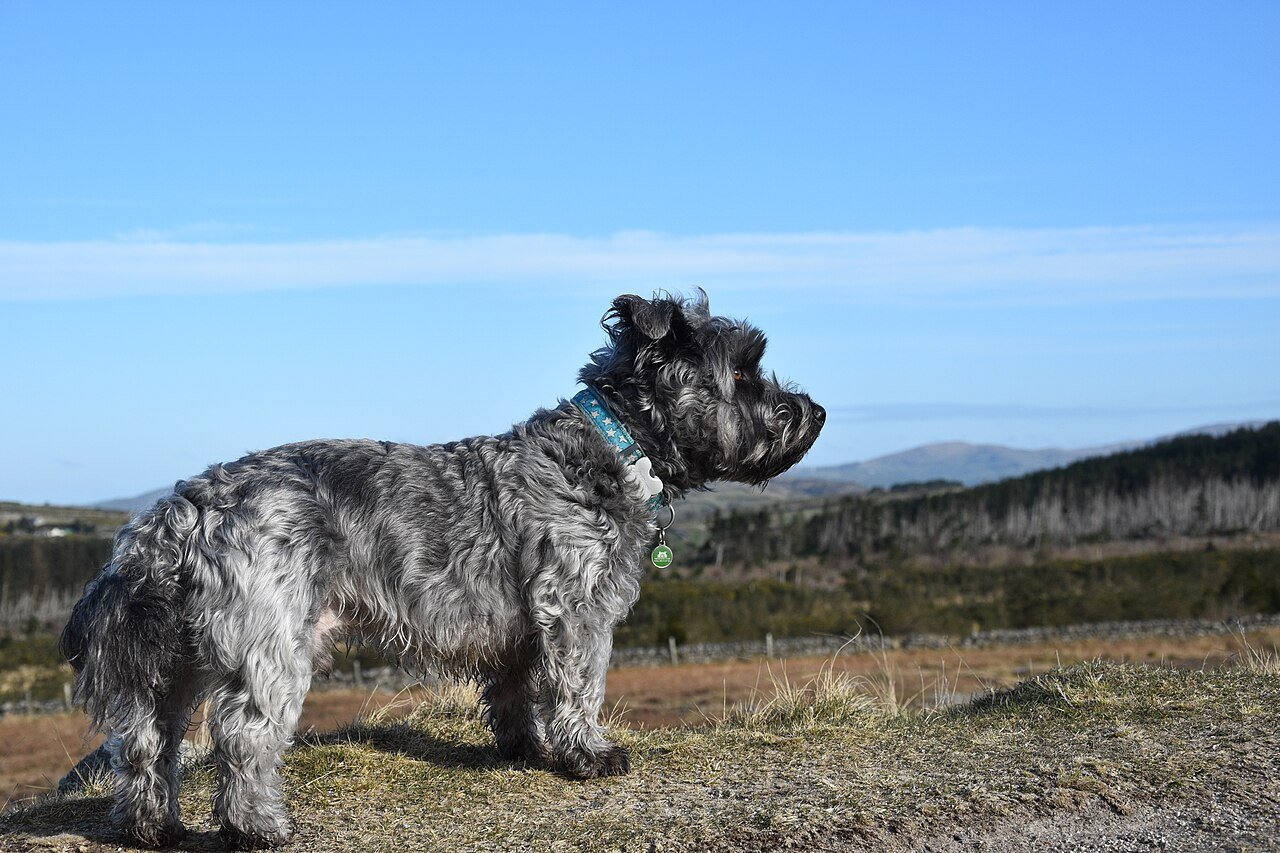
The Glen of Imaal Terrier comes from County Wicklow in Ireland, where a strong low-bodied terrier hunted vermin and badgers and helped around farms. Stories of kitchen turnspit work are part of its traditional history rather than a reason to treat every detail as certain. The substantial body rests on short legs.
Training & behavior
Use brief reward-based lessons and change the task before repetition loses interest. Teach a trade and a turn away from small-animal movement. Arrange parallel walks before closer dog introductions, keeping the option to separate. A quieter presentation than some terriers does not remove hunting interest or guarantee sociability.
Daily needs & enrichment
Choose ground-level searches, gentle play, and walks developed gradually with fitness. Protect a puppy from repeated furniture jumps, steep stair descents, and forced long outings that load the developing front limbs. Supervise activity and offer rest rather than relying on the puppy to stop before becoming overtired.
Coat care
Comb the softer furnishings around ears, neck, belly, and legs at least weekly, using a brush to loosen dirt first. The rough jacket needs periodic hand-stripping of ready dead hair, commonly several times yearly, with instruction from someone experienced in this coat. Do not yank firmly attached hair.
Bathe when dirty, rinse dog shampoo out of both coat layers, and dry the furnishings and roots with towels and gentle airflow. Keep the dog secure on a low nonslip grooming surface; do not risk a leap from a high table. Routine clipping changes the jacket, while scissors beneath a tight mat can cut concealed skin.
Living Environment & Daily Needs
Plan patient, encouraging lessons and consistent boundaries for a strong Glen. Its lower, calmer presentation still needs games and activity, with household access and rest assessed for the actual dog rather than assumed from stature.
Practical question
Can a short-legged puppy safely jump down because the furniture looks low?
Do not assume so. Reduce repeated landings and provide assisted or ground-level access while the limbs develop.
Plan care for the individual dog
Budget, time alone and household compatibility depend on the individual dog and your circumstances. Use our care budget guide, time-alone planning guide and questions before adopting alongside the breed-specific source information above.
Health questions for a veterinarian
Hip and elbow evaluation, ophthalmologist examinations, and a crd3 DNA test address documented concerns. Cone-rod dystrophy damages the retina and can impair vision; the test covers its specific inherited form rather than every eye condition. SOD1 testing provides risk information for degenerative myelopathy, not a diagnosis of weakness. Persistent front-leg pain, altered gait, or vision changes needs examination, and normal results do not make excessive loading safe for a growing dog.
Editorial update: October 24, 2026. General information; individual care requires veterinary assessment. No veterinary review is claimed. See our Editorial Policy for sourcing and review practices.