Ranges describe the registry profile, not a measurement, life expectancy, or health prediction for a particular dog. Separate sex or variety ranges are preserved where the source supplies them.
Source characteristics at a glance
The registry uses an ordinal 1–5 scale. A higher number indicates more of the named trait, not a better dog or a compatibility score. These descriptions are general and are not clinical measurements.
History and original work
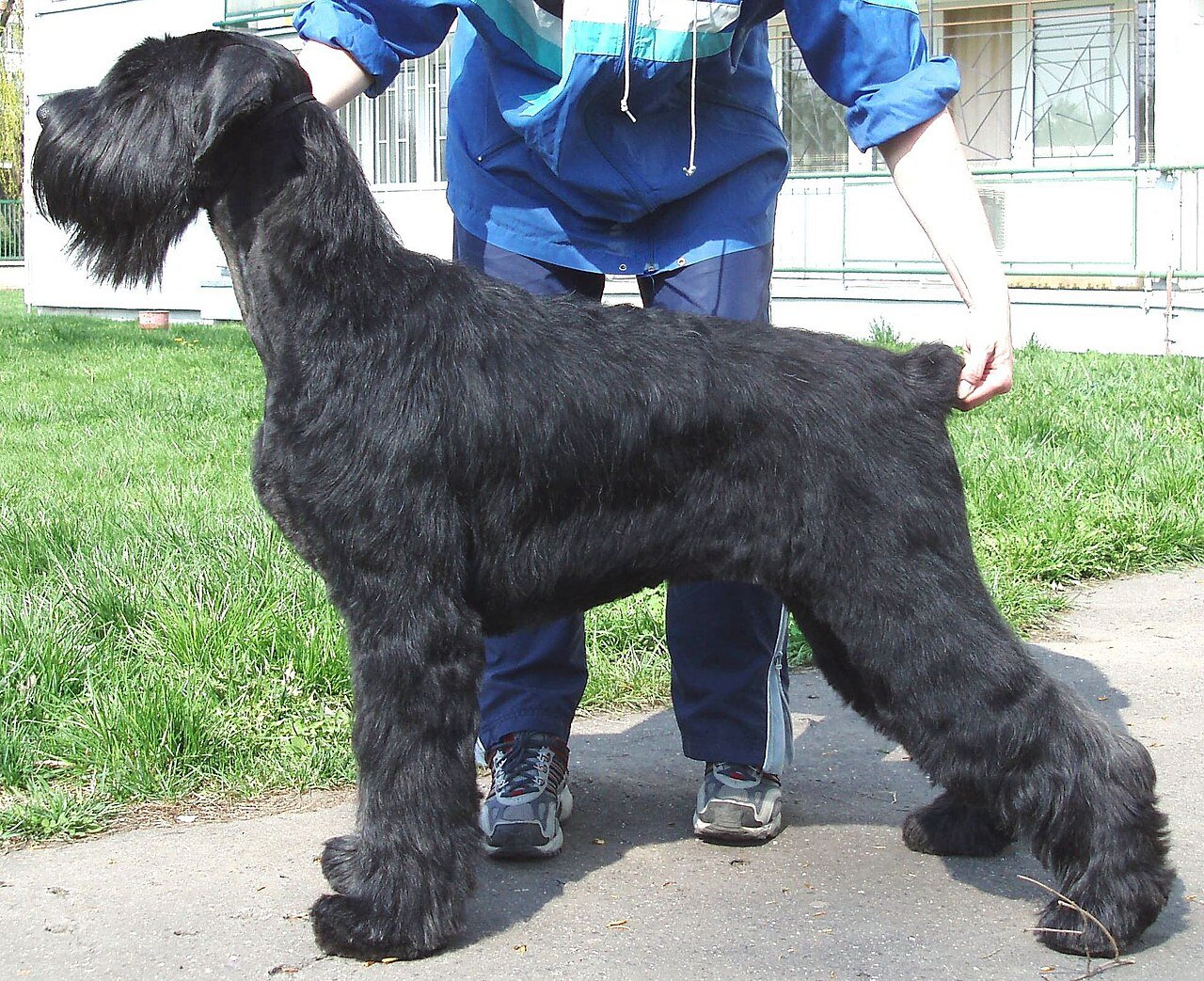
The Giant Schnauzer developed in Bavaria as a substantial cattle-driving and guarding dog, related to the Standard Schnauzer. Later work included police and military roles. Its strength and alertness still require deliberate teaching, while the double coat needs maintenance beyond merely brushing the visible beard.
Training & behavior
Teach waiting behind a barrier while visitors enter, then reward calm behavior at a manageable distance. Rehearse loose-leash turns before strength makes pulling difficult to interrupt. Use short tasks with clear rewards and a finish cue. Do not encourage suspicion or expect a protective dog to decide who may enter a family home.
Daily needs & enrichment
Tracking, rally, controlled retrieving, and gradually conditioned hikes provide useful work. Add demanding running or draft tasks only after physical maturity and suitable preparation. Include searching and quiet recovery instead of maintaining constant high arousal. Household members need a practical handling plan for a large energetic dog.
Coat care
Brush and comb weekly through the beard, brows, legs, belly, and armpits, with extra checks where food or moisture collects. The harsh jacket and softer undercoat also need regular clipping or skilled hand-stripping. Pet clipping can be practical but may soften the appearance; stripping should remove ready dead hair without painful pulling.
Wash the beard when dirty and dry it rather than leaving it damp against skin. Bathe as needed with dog shampoo, rinse thoroughly, and dry dense areas with cool airflow. Keep sanitary areas and feet manageable. Avoid clipping over hidden mats or cutting near eyes and folded skin without appropriate handling skills.
Living Environment & Daily Needs
A Giant Schnauzer needs sustained activity and clear teaching for an engaged working mind. Check full-sized rest, safe household routes, and grooming arrangements alongside skills practice; strength and coat care both require regular planning.
Practical question
Is clipping a pet coat the same as maintaining a stripped jacket?
No. Both require upkeep, but clipping cuts growing hair and may change texture; discuss the maintenance goal before choosing a routine.
Plan care for the individual dog
Budget, time alone and household compatibility depend on the individual dog and your circumstances. Use our care budget guide, time-alone planning guide and questions before adopting alongside the breed-specific source information above.
Health questions for a veterinarian
Hip and elbow imaging, ophthalmologist examinations, and thyroid assessment are established screening priorities. Cardiac evaluation and breed-relevant tests for prcd-PRA and dilated cardiomyopathy can add information, but a specific DNA result is not a clearance for every retinal or heart disease. Thyroid results require interpretation alongside signs. Persistent lethargy, changing exercise tolerance, fainting, or progressive vision difficulty should be examined even when parental screening reports were normal.
Editorial update: October 24, 2026. General information; individual care requires veterinary assessment. No veterinary review is claimed. See our Editorial Policy for sourcing and review practices.