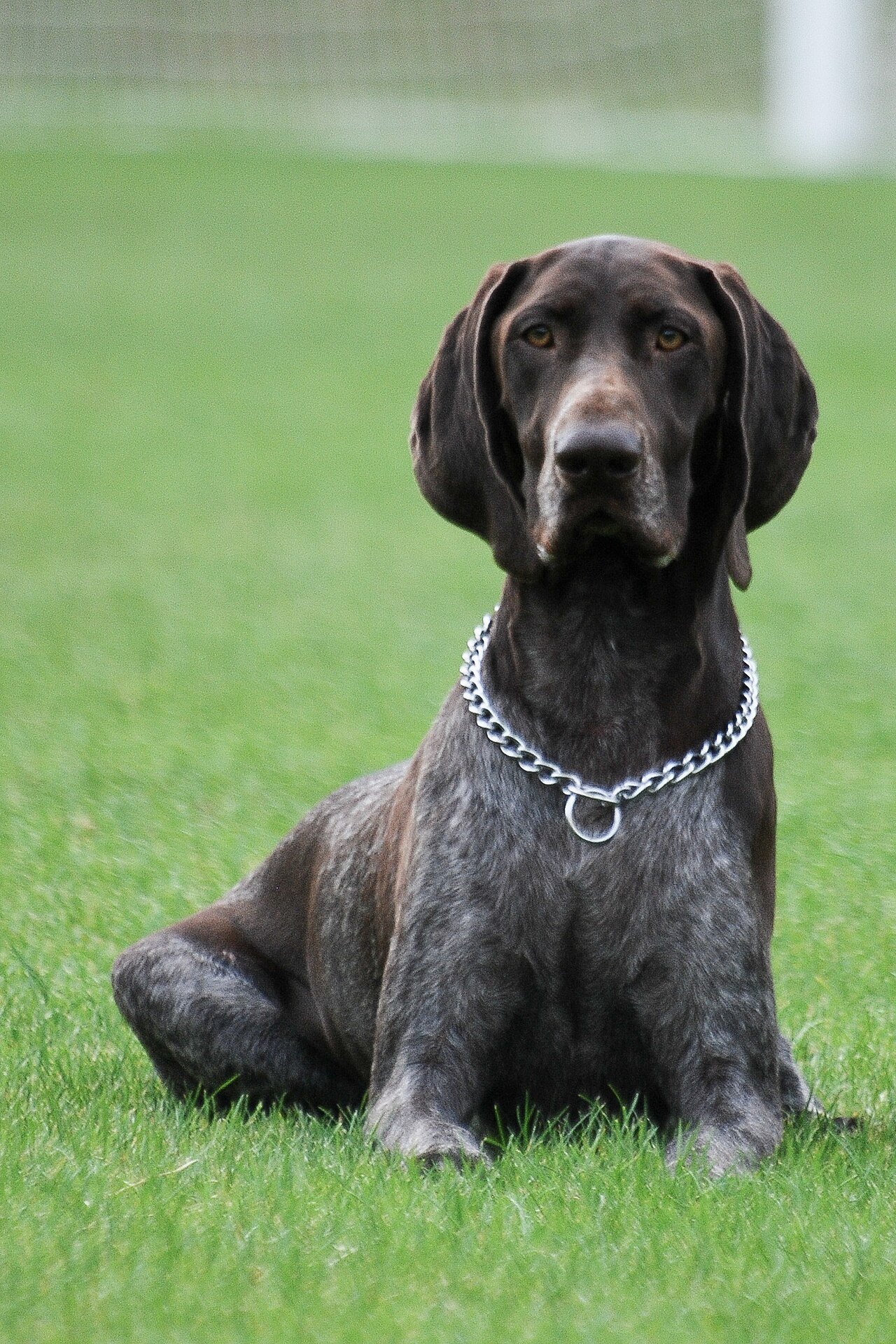
Ranges describe the registry profile, not a measurement, life expectancy, or health prediction for a particular dog. Separate sex or variety ranges are preserved where the source supplies them.
Source characteristics at a glance
The registry uses an ordinal 1–5 scale. A higher number indicates more of the named trait, not a better dog or a compatibility score. These descriptions are general and are not clinical measurements.
History and original work
German hunters developed the German Shorthaired Pointer in the nineteenth century to combine searching, pointing, tracking, and retrieving. It was selected as a versatile gundog rather than a specialist for just one task. The short coat reduces brushing work, while the sporting drive remains substantial.
Training & behavior
Teach checking in before releasing the dog to investigate, then add distractions gradually. Practice waiting before retrieves and delivering without a chase game. Reinforce quiet settling after activity. Prevent repeated access to counters and unattended objects, especially while an energetic adolescent is still learning household routines.
Daily needs & enrichment
Mix scent trails, retrieves, structured play, and conditioned running appropriate to the individual. Introduce swimming with safe exits and supervision. A puppy needs exploration and basic coordination rather than forced mileage or repeated jumps. Mental tasks and recovery belong beside physical effort, not only an attempt to exhaust the dog.
Coat care
Every few days, use a rubber mitt or soft brush over the short coat to lift loose hairs before they lodge in fabrics. Give extra light sessions when shedding increases. After field work, check between toes, under equipment, and around the ears for debris or irritation.
An occasional bath when dirty is enough for many dogs: use a gentle dog shampoo, rinse thoroughly, and towel-dry. No routine clipping is needed. Avoid harsh scrubbing to remove the small prickly hairs, and do not pour water into the ear canal. Persistent discharge, soreness, or odor warrants assessment.
Living Environment & Daily Needs
A GSP needs dependable outlets for athletic activity, retrieving, and shared learning. Evaluate who can provide that involvement and comfortable rest afterward; a short coat or outdoor area does not reduce the sporting commitment.
Practical question
Does being tired guarantee good behavior indoors?
No. Teach resting and appropriate chewing directly; more throwing can leave an athletic dog fitter and more excited without improving those household skills.
Plan care for the individual dog
Budget, time alone and household compatibility depend on the individual dog and your circumstances. Use our care budget guide, time-alone planning guide and questions before adopting alongside the breed-specific source information above.
Health questions for a veterinarian
Hip and elbow evaluations, ophthalmologist examination, and cardiac assessment address recognized screening concerns. A specific cone degeneration DNA test addresses inherited day-blindness, not every retinal disease; a dog having trouble navigating in bright light still needs examination. Request dated reports rather than a general promise that parents were tested. Repeated attempts to vomit without producing anything, abdominal swelling, marked restlessness, or collapse can indicate bloat and require immediate veterinary care. Normal breeding screens do not prevent that emergency.
Editorial update: October 24, 2026. General information; individual care requires veterinary assessment. No veterinary review is claimed. See our Editorial Policy for sourcing and review practices.