To stop excessive barking, identify what triggers it, reduce situations your dog cannot handle, and reward a useful alternative such as checking in or resting on a mat. Meet basic needs first. Sudden changes, pain, or panic when left alone call for veterinary assessment. The goal is a dog who feels and behaves more comfortably, with room for normal canine communication.
That answer sounds simple until a delivery arrives during a work call. A quiet cue may help one dog, while another needs distance from the window or support for separation distress. Choosing the right response matters more than finding the loudest command.
This guide explains how to stop a dog from barking excessively through everyday management and reward-based practice. Start with the situation you actually observe, then build a plan your household can repeat.
When does normal barking become a problem?
There is no universal number of acceptable barks. Consider the context, how often episodes occur, how long they last, and whether your dog can recover. A short greeting followed by relaxed activity differs from prolonged barking with pacing or escape attempts.
Also consider the effect on sleep, family life, and neighbors. A behavior can need attention even when it is a normal part of being a dog. However, suppressing sound without addressing discomfort can leave the underlying problem unresolved.
Listen and watch together. Posture, movement, location, and what happens next provide more information than the sound alone. Even a wagging tail needs context; our guide to what different tail movements can mean explains why one signal cannot tell the whole story.
Find the pattern before choosing a solution
Keep a brief record across several ordinary days. Write down what happened just before the barking, what your dog did, and what followed. Describe observations rather than assigning motives: “barked when the cart passed” is more useful than “wanted to dominate the hallway.”
Record whether you were home, where your dog stood, and how easily they returned to another activity. If barking occurs during absences, a camera focused inside your home may provide helpful information. Do not leave a distressed dog alone longer just to obtain a recording.
| Pattern and possible cause | First adjustment |
|---|---|
| Barks at people through a window. Possible alarm, excitement, or frustration. | Reduce the view and offer a resting area farther away. |
| Barks while you prepare a toy or meal. Possible anticipation or a learned request. | Practice an easy alternative before excitement rises. |
| Barks and paces after you leave. Possible separation-related distress. | Arrange veterinary advice and manageable absence support. |
| Barks at dogs during walks. Possible fear, frustration, or excitement. | Create distance and avoid forced greetings. |
| Starts barking unusually at night. Possible environmental change, discomfort, or another health concern. | Check immediate needs and discuss new patterns with your veterinarian. |
These patterns are clues, not diagnoses. Several causes can overlap. For example, a dog may react to hallway sounds and also struggle with being alone. One training exercise may not address both.
Make everyday life easier before training

Check needs instead of assuming disobedience
Confirm access to fresh water, regular meals, bathroom breaks, comfortable rest, and appropriate company. A dog who needs to go outside should not have to remain silent to receive help. Puppies, older dogs, and dogs with health conditions may need different routines.
Provide movement and activities suited to age, health, and individual preference. A relaxed sniffing walk, a short training game, or a safe food puzzle can offer useful outlets. Introduce puzzles at an easy level and supervise new items. Account for training food within the daily diet.
A busy schedule does not automatically produce a settled dog. Leave time for uninterrupted rest, and notice whether an activity leaves your dog comfortable or more wound up. Ask your veterinarian about suitable exercise if your dog has mobility or other medical limitations.
Reduce repeated exposure to difficult triggers
Move furniture or your dog’s resting spot away from a busy window. Use curtains when helpful, and supervise yard time rather than leaving your dog to rehearse fence barking. These adjustments create breathing room while training develops.
For a noisy apartment entrance, set up a comfortable area farther inside. Our guide to barking at hallway sounds covers that specific setup. Introduce barriers gradually, because confinement can frustrate or frighten some dogs.
Background sound may help some households, but it should stay at a comfortable volume. Watch your dog’s response rather than assuming a playlist is treatment. Read our review of calming music for dogs for the limits of that approach.
Teach a response your dog can succeed at
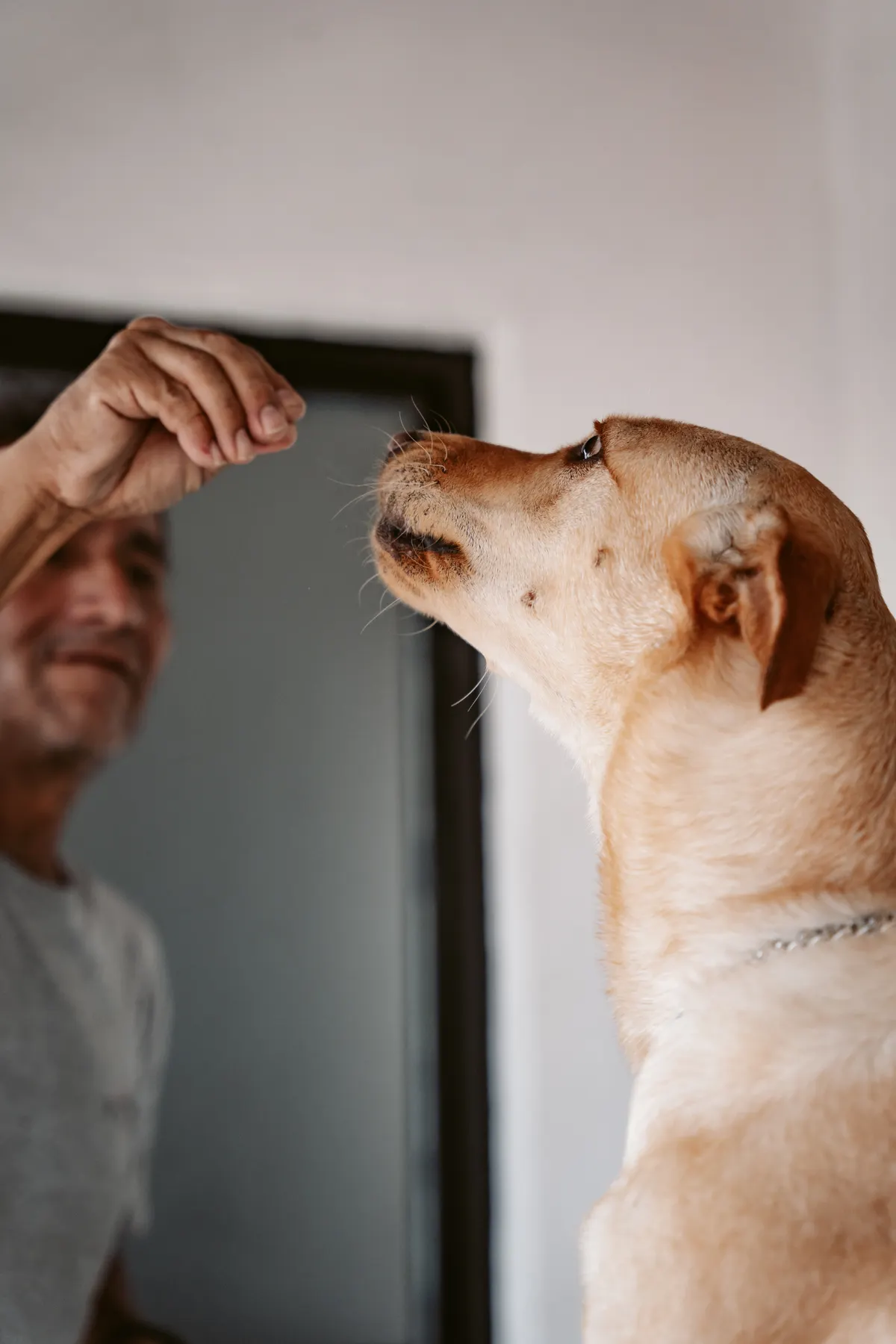
Choose one practical behavior: turn toward you, follow you away from the window, or settle on a mat. Teach it in a quiet place before expecting it during a barking episode. A familiar action gives your dog a clear route to earning a reward.
Start with an easy check-in
- Practice when your dog is awake, comfortable, and free from the trigger.
- Say their name once. When they turn toward you, mark the moment with a consistent word such as “yes.”
- Offer a small reward your dog enjoys. Let them move away between repetitions.
- Practice from another easy location before adding a mild distraction.
- Use the cue in everyday situations while success remains likely.
Keep sessions brief and stop while the task is still manageable. If your dog repeatedly struggles, simplify the exercise. Louder cues and longer sessions do not fix a setup that is too difficult.
Build a mat habit outside busy moments
Place a mat in a comfortable location away from the doorway. Reward looking at it, stepping onto it, and eventually choosing to rest there. Add a cue once approaching the mat is familiar. Allow your dog to leave; the mat should predict a pleasant option.
For a delivery, prepare the resting area before opening the door. Secure your dog safely, then handle the visitor. Practice with a household member under easy conditions before relying on this routine during a real interruption.
Add a quiet cue thoughtfully
A quiet cue can become a signal for a pause, but it is not a substitute for addressing fear. Begin with a mild, manageable situation where your dog naturally pauses. Calmly say “quiet” as the pause begins, mark the silence, and reward.
As your dog understands, give the cue once when a pause is likely. Gradually reward a little more quiet time, keeping the task easy. Do not deliberately provoke intense barking to practice. If your dog cannot disengage, create distance and return to easier training later.
Also reward quiet choices that happen without barking first. Otherwise, the routine can become bark, pause, receive food. Notice a voluntary check-in before the window rush or a relaxed moment during meal preparation. Those are valuable opportunities.
Match your response to the situation
Window, doorbell, and visitor barking
Reduce the view or sound where practical, and rehearse moving away before visitors arrive. Ask guests to avoid crowding or reaching toward your dog. A dog who is frightened does not need to greet everyone to complete a successful visit.
For carefully planned practice, begin with a very mild version of the trigger. Pair it with something pleasant while your dog remains comfortable. Increase difficulty gradually with qualified guidance when needed. Real deliveries are unpredictable, so manage those separately from practice.
Barking for attention or activities
First rule out a genuine need or distress. If your comfortable dog has learned that barking starts play, teach another request, such as approaching with a toy or sitting nearby. Respond to that alternative before barking begins whenever possible.
Avoid turning the episode into a conversation through repeated scolding. Offer regular interaction during quiet periods so attention is available through other routes. If withdrawing attention makes your dog distressed or the behavior escalates, reassess the cause with professional help.
Barking at dogs on walks
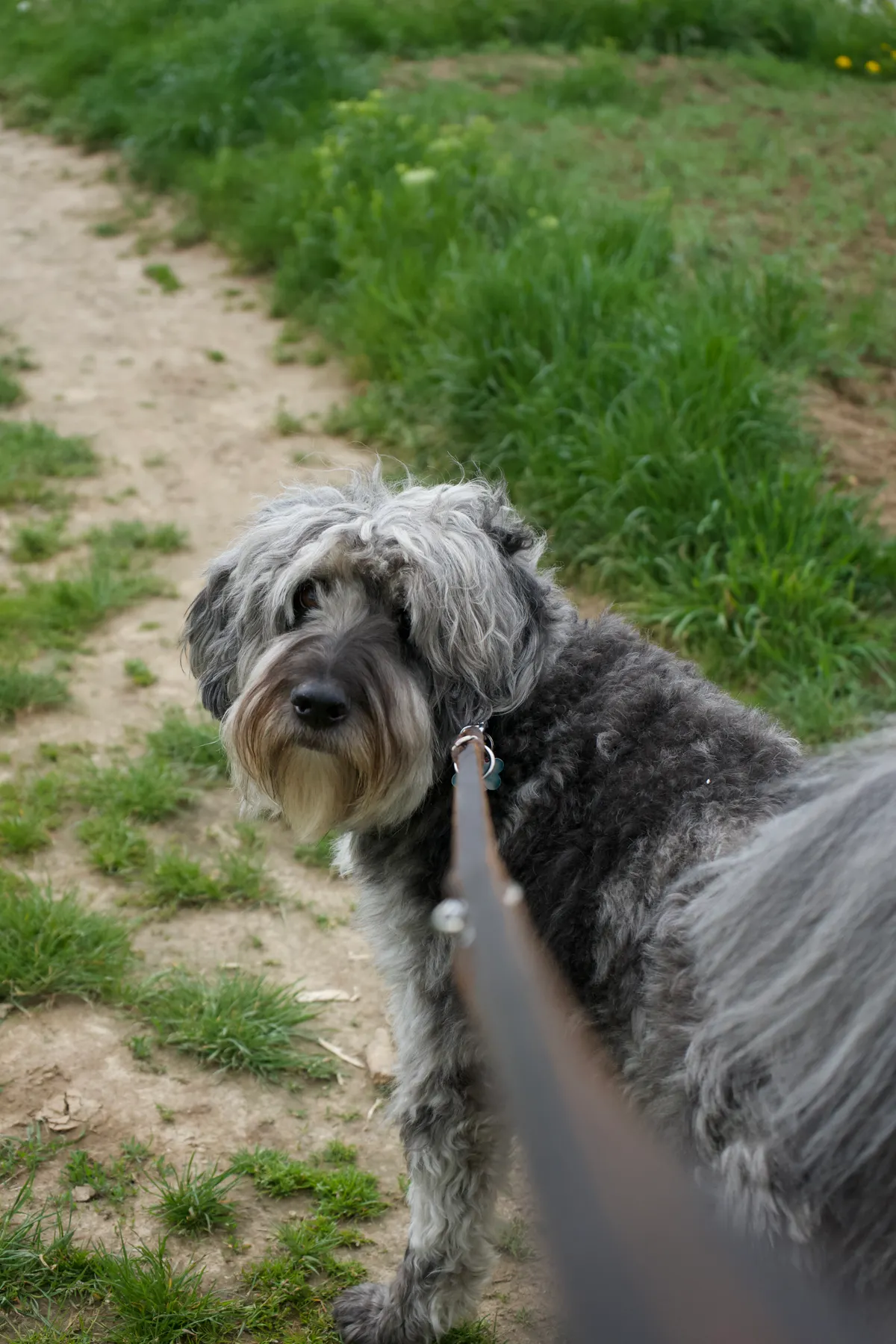
Choose space over a forced encounter. Cross the street, turn onto a quieter route, or use a visual barrier when safe. Reward a voluntary check-in at a distance where your dog can still engage comfortably.
Do not require a close sit while another dog approaches if that leaves your dog trapped. Move away calmly instead. For lunging, snapping, or reactions you cannot safely manage, ask for an individual assessment and use secure, well-fitted walking equipment.
Barking when left alone
Barking with pacing, destruction near exits, drooling, or escape attempts may indicate separation-related distress. A recording can help your veterinarian understand the pattern, but it cannot establish a diagnosis by itself.
Do not use a “cry it out” approach for suspected panic. Arrange practical support to reduce difficult absences while seeking help. A crate is appropriate only if your dog is comfortable there; confinement can worsen distress for some dogs.
Separation treatment may involve a carefully individualized behavior plan and, when appropriate, veterinarian-prescribed medication. A longer walk or another toy cannot be assumed to resolve it. Never give human medication or a sedating product without veterinary direction.
Avoid methods that add fear or confusion
The American Veterinary Society of Animal Behavior recommends reward-based methods for training and behavior modification. Its current position opposes aversive methods. For barking, choose a plan that changes the situation and teaches skills while supporting welfare.
Avoid shock collars, startling sprays, shouting, leash corrections, and deliberately frightening noises. These methods can add an unpleasant experience around an already difficult trigger. Less audible barking does not by itself demonstrate that a dog feels safe.
Never tie the mouth closed or hold the muzzle shut as a training technique. Do not leave equipment on that interferes with normal breathing, drinking, or temperature regulation. A properly introduced basket muzzle has specific safety uses, but it is not a barking treatment.
Likewise, a calming accessory should not replace assessment. Products marketed for relaxation vary, and an individual dog’s response is not guaranteed. Review recurring training problems in our guide to common dog training mistakes before adding more cues or equipment.
Track progress without setting an unrealistic deadline
Choose one setting to work on first. A clearer goal is “can move away from the window when a person passes at a comfortable distance,” rather than “never barks again.” Compare similar situations so a quiet day does not become proof that every challenge is solved.
- Record the trigger and the adjustment you used.
- Notice whether barking episodes become easier to interrupt.
- Watch for faster recovery and more voluntary rest.
- Check that your dog remains willing to engage and move freely.
- Agree on cues and rewards across the household.
- Reduce difficulty when tension or reactions increase.
There is no honest universal promise of a fix within a few days. Learning history, environment, health, and the cause all matter. Seek help early if you cannot find a manageable starting point. You do not need to wait for a neighbor complaint.
When should you call a veterinarian?
Book an assessment for a new or unexplained change, repeated nighttime vocalizing, apparent pain, trouble resting, or signs of distress during absences. Bring your log and any safely obtained video. Mention changes in appetite, movement, sleep, or bathroom habits.
Seek urgent veterinary care if vocalizing accompanies difficulty breathing, collapse, severe pain, or significant injury. Escape attempts that cause injury also need prompt attention. Keep people away from a distressed dog’s face and avoid cornering them.
Your veterinarian can check medical causes and recommend behavior support. For complex fear, aggression, or separation problems, ask about a board-certified veterinary behaviorist. When choosing a trainer, discuss reward-based methods, relevant experience, and how the plan changes if your dog becomes uncomfortable.
Frequently asked questions
How do I stop my dog from barking at everything?
Identify recurring triggers and reduce their intensity or frequency. Teach a check-in or moving-away cue somewhere quiet, then practice around mild distractions. Broad reactivity, difficulty recovering, or a sudden change warrants veterinary and qualified behavior support.
Should I ignore my dog when they bark?
Only after checking needs and considering the cause. Withholding attention may help a learned attention request, but ignoring pain, fear, or separation distress does not address the problem. Teach an alternative way to request interaction and reward it consistently.
Can I teach my dog to stop barking on command?
Many dogs can learn a quiet cue through rewards for manageable pauses. Practice in easy situations and gradually build duration. A cue is less useful when a dog is overwhelmed, so reduce exposure and address the underlying cause as well.
Why does my dog bark more at night?
Possible reasons include outside sounds, bathroom needs, discomfort, or changes in sleep and cognition. New nighttime barking, especially in an older dog, deserves veterinary assessment. Check immediate needs and record the pattern rather than assuming misbehavior.
Will more exercise stop excessive barking?
Appropriate exercise and enrichment can support a balanced routine, particularly when a dog lacks outlets. However, they are not a complete treatment for pain, fear, or separation-related distress. Match activities to your dog’s health and include enough rest.
Are anti-bark collars a good solution?
Choose reward-based training and management instead. Devices that deliver shock, spray, or startling stimulation can add fear or distress without resolving the cause. Persistent barking is a reason to reassess the plan with your veterinarian or a qualified behavior professional.
Build quieter moments your dog can repeat
Start with one pattern, one helpful environmental change, and one easy alternative behavior. Reward comfortable choices before barking builds, and make the next step small enough to succeed. Seek individual help when health, distress, or safety concerns make the situation more complicated.
General guidance does not replace individual veterinary or behavior assessment.