Ranges describe the registry profile, not a measurement, life expectancy, or health prediction for a particular dog. Separate sex or variety ranges are preserved where the source supplies them.
Source characteristics at a glance
The registry uses an ordinal 1–5 scale. A higher number indicates more of the named trait, not a better dog or a compatibility score. These descriptions are general and are not clinical measurements.
History and physical characteristics
The Finnish Lapphund developed from the dogs of the Sámi people in the northern region of Lapland. As reindeer husbandry changed, these versatile dogs became important herding companions. The breed's watchfulness, quick reactions, and use of its voice remain practical considerations even when no livestock is present.
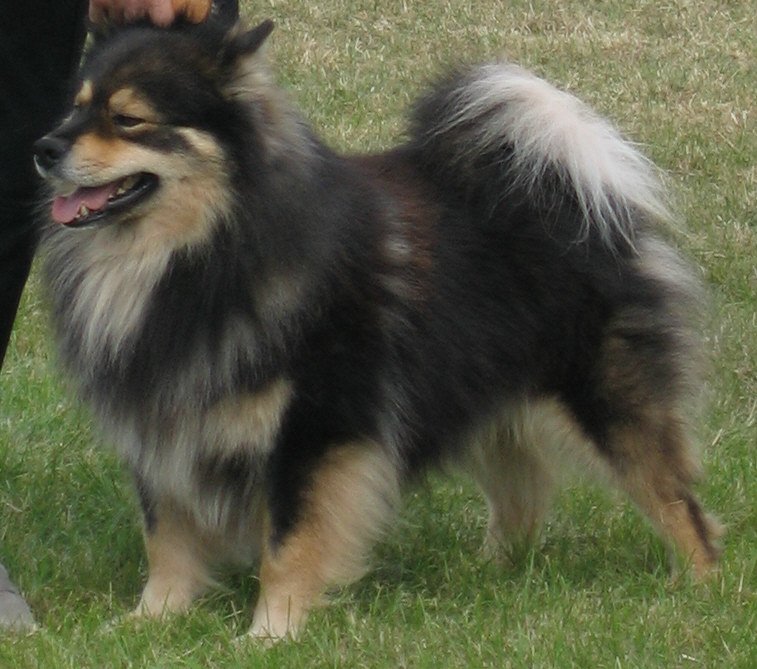
A profuse double coat, upright ears, and spitz outline are characteristic. The fluffy appearance can conceal loose undercoat or tangles, so assessing grooming needs requires checking the roots rather than judging the outer silhouette.
Temperament and training
A Finnish Lapphund may enjoy learning while reacting quickly to movement and household sounds. Reward a pause after an alert and offer an alternative task rather than repeatedly demanding silence. Introduce unfamiliar activity gradually. Supervise children's running games and individual animal introductions instead of relying on an approachable manner.
Daily needs & enrichment
Use varied walks, food searches, and short learning games rather than keeping a herder continually active. Teach rest after outings and adjust effort in warm conditions beneath the dense coat. A working mind benefits from new tasks, with predictable downtime between them.
Coat care
Brush thoroughly about weekly, increasing to short daily sessions during seasonal shedding. Use a suitable pin or slicker brush in lifted sections, then a metal comb to check behind the ears, neck, armpits, belly, and leg feathering. Separate small tangles while supporting the hair at the roots instead of pulling through resistance.
Bathe occasionally for actual dirt, rinse dog shampoo fully, and dry the dense inner coat with towels and comfortable airflow. Routine body shaving is not needed; discuss any medically necessary clipping with the veterinarian. Avoid hot drying, repeatedly scraping the skin with an undercoat tool, and leaving damp wool packed beneath a dry surface. Keep paw and nail handling familiar.
Living Environment & Daily Needs
Give a Finnish Lapphund shared games and outings, and teach ways to settle around everyday sounds. Plan regular brushing and seasonal shedding cleanup, while considering how its watchful voice fits household and neighborhood routines.
Care through life stages
Introduce puppies to combing at the roots, gentle paw care, and recovering after an alert. Adults benefit from varied shared work and rest rather than constant stimulation. Adjust grooming positions and outing intensity for seniors, and investigate new stiffness, visual difficulty, or reduced stamina.
Frequently asked questions
Will shaving a Lapphund remove the need to manage summer heat? No. Coat removal is not a substitute for adjusting activity, shade, water, and comfortable shelter. Maintain the coat by removing loose undercoat and assess the individual's comfort rather than treating a haircut as heat protection.
Questions to ask before choosing a dog
Request PRA-prcd results as well as clinical eye examinations, and ask about Pompe and DM testing. Review joint records and how this dog settles after barking or excitement. See the actual brushing routine before committing to coat maintenance.
Plan care for the individual dog
Budget, time alone and household compatibility depend on the individual dog and your circumstances. Use our care budget guide, time-alone planning guide and questions before adopting alongside the breed-specific source information above.
Health questions for a veterinarian
Hip and elbow imaging and patellar examination address joint development and kneecap stability. Clinical eye examinations remain important because a PRA-prcd DNA result only addresses the tested retinal variant, not all eye disease. Ask for dated reports and discuss follow-up rather than relying on a panel described simply as clear.
Club guidance also includes Pompe disease (glycogen storage disease type II) and degenerative-myelopathy testing. These are separate genetic questions; a DM risk result is not a diagnosis or a prediction that disease is inevitable. Persistent lameness, weakness, visual changes, or exercise difficulty needs veterinary assessment rather than assuming normal parental tests exclude illness.
Updated October 25, 2026. General information; see our Editorial Policy for sourcing and review practices.