Ranges describe the registry profile, not a measurement, life expectancy, or health prediction for a particular dog. Separate sex or variety ranges are preserved where the source supplies them.
Source characteristics at a glance
The registry uses an ordinal 1–5 scale. A higher number indicates more of the named trait, not a better dog or a compatibility score. These descriptions are general and are not clinical measurements.
History and original work
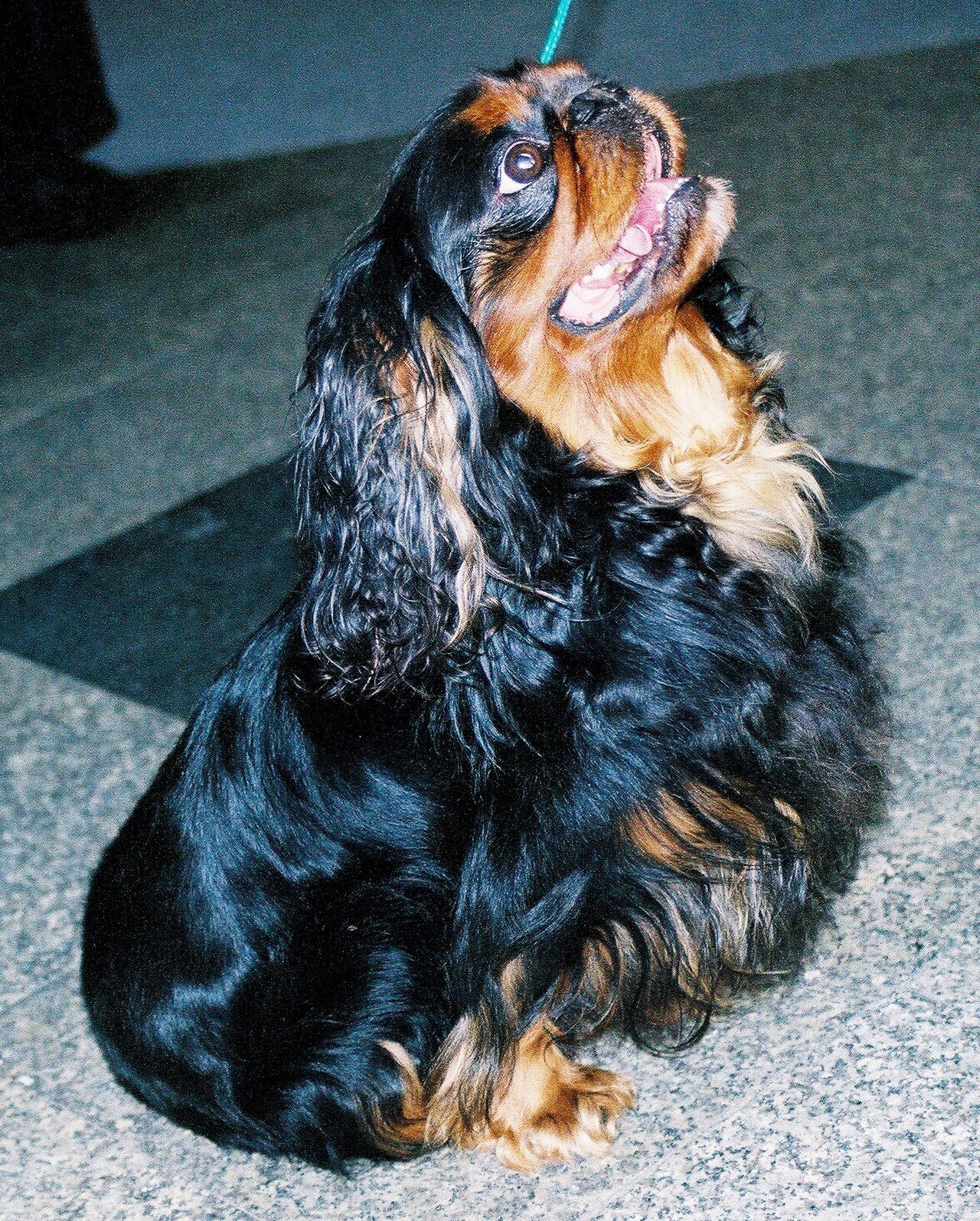
The English Toy Spaniel belongs to the British toy-spaniel tradition associated with royal households. Later selection produced the compact, shorter-faced type called King Charles Spaniel in Britain. It is distinct from the Cavalier King Charles Spaniel, so their disease profiles and physical expectations should not be treated as interchangeable.
Training & behavior
Reward short lessons in coming when called, accepting a harness, and stepping onto a mat. Give a cautious dog time around new people rather than repeatedly picking it up for greetings. Handle feet and face gradually, with supported lifting when needed. Children should interact at floor level under supervision without crowding a resting dog.
Daily needs & enrichment
Offer comfortable walks, a small toy search, and gentle play with pauses. Choose cooler conditions in warm weather and stop for labored breathing or poor recovery; a short muzzle is not a reason to exercise through distress. Keep footing secure and prevent repeated leaps from high furniture. Adapt activity to the individual rather than relying only on the lapdog label.
Coat care
Brush the long, silky furnishings at least twice weekly with a pin or soft brush, then check with a long-toothed comb. Lift the hair behind ears, beneath the front legs, and around the belly and tail. Work carefully over thin skin and do not pull through resistant knots.
Bathe when soiled, rinse dog shampoo fully, and blot before drying the roots with gentle airflow. Keep the face and ear canals clear of bath water. Modest foot or sanitary tidying may help, but routine body shaving is unnecessary. Avoid hot enclosed drying, scissors beside the eyes, and leaving a small dog cold while its coat remains wet.
Living Environment & Daily Needs
Offer an English Toy Spaniel gentle games and shared learning as well as restful company. Keep bathroom access and resting arrangements practical, and make regular grooming of the silky coat part of the household routine.
Practical question
Is an English Toy Spaniel another name for a Cavalier?
No. In Britain it is called the King Charles Spaniel; the Cavalier is a separate breed with a different head and build.
Plan care for the individual dog
Budget, time alone and household compatibility depend on the individual dog and your circumstances. Use our care budget guide, time-alone planning guide and questions before adopting alongside the breed-specific source information above.
Health questions for a veterinarian
Cardiac evaluation and an ophthalmologist examination are documented screening priorities, with patellar assessment also relevant. A normal examination at one age is not lifelong protection. Short-faced anatomy calls for attention to breathing comfort and heat management; severe respiratory effort or collapse is an emergency. Squinting, a closed eye, fainting, or repeated skipping also needs assessment. Do not assume a diagnosis common in a different toy spaniel applies here without examining this individual.
Editorial update: October 24, 2026. General information; individual care requires veterinary assessment. No veterinary review is claimed. See our Editorial Policy for sourcing and review practices.