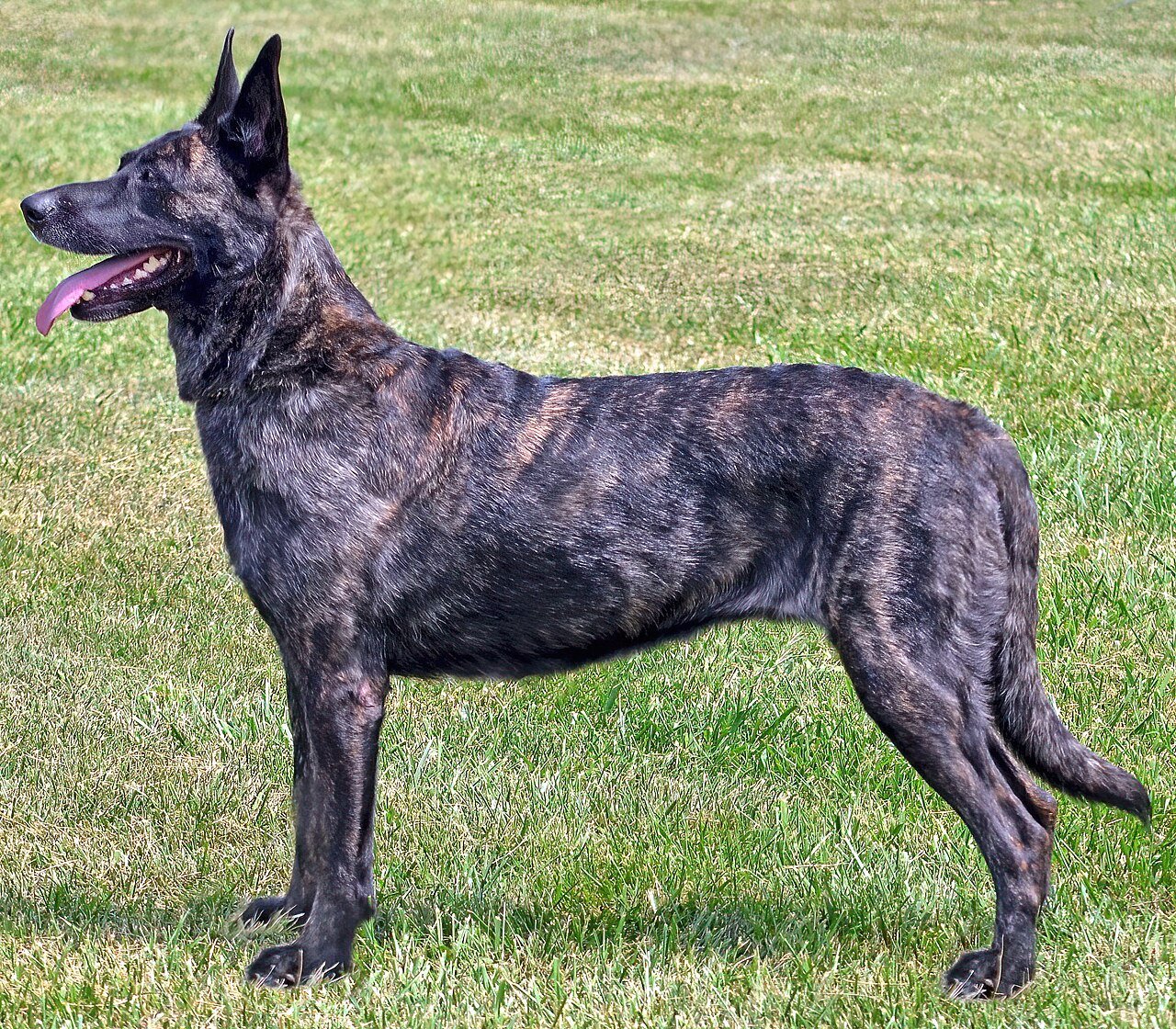
Ranges describe the registry profile, not a measurement, life expectancy, or health prediction for a particular dog. Separate sex or variety ranges are preserved where the source supplies them.
Source characteristics at a glance
The registry uses an ordinal 1–5 scale. A higher number indicates more of the named trait, not a better dog or a compatibility score. These descriptions are general and are not clinical measurements.
History and original work
Dutch Shepherds developed in the Netherlands as adaptable farm dogs, tending sheep and cattle and helping around the homestead. A breed standard was established in 1898. Short, long, and rough coats remain distinct varieties of the same breed; later service work built on an older tradition of close cooperation and independent decisions around livestock.
Temperament and training
Give this observant dog a clear task and reward the choice you want before it invents another job. Short lessons with changing problems can suit a dog that loses interest in repetition. Practice greeting visitors, releasing a toy, and moving past running animals. Working ancestry can mean substantial drive; a responsive dog still needs help learning when activity is finished.
Daily needs & enrichment
Tracking, searches for a hidden article, and precise movement exercises offer different challenges from simply running farther. Introduce new surfaces and agility equipment gradually with suitable instruction. A practical home routine might combine exploratory walks, a brief thinking task, and a taught rest period. Avoid using exhaustion as the only way to obtain calm behavior.
Coat care
Match care to coat type. Brush a short coat more thoroughly during shedding; comb a long coat through the feathering and places that rub. A rough coat may need skilled hand-stripping rather than the same clipping routine used on a long coat. Ask a groomer familiar with the variety to demonstrate maintenance, and check for debris after field work.
For short coats, begin with weekly checks and increase brushing during shedding. Long coats generally need thorough weekly combing or more according to activity. The registry describes monthly combing and about twice-yearly skilled hand-stripping for rough coats; use experienced guidance rather than clipping every variety alike. Bathe as needed and dry comfortably.
Living Environment & Daily Needs
A Dutch Shepherd's day needs mental tasks as well as physical activity with a caregiver. Arrange safe boundaries and quiet recovery time, and guide everyday decisions rather than expecting intelligence or a larger home to produce manners automatically.
Care through life stages
Puppies need cooperative handling and gradual learning around moving distractions. Condition adult tracking, sports, or service-related work progressively and teach a finish. Seniors may need modified tasks and grooming positions; stumbling or eye discomfort warrants investigation.
Frequently asked questions
Are all Dutch Shepherd coats maintained the same way? No. Short, long, and rough coats differ. Confirm the actual variety and learn its maintenance technique, including whether skilled hand-stripping is appropriate.
Questions to ask before choosing a dog
Which coat variety and working lines are involved, and what does that mean for this dog's daily engagement? Ask for the parents' orthopedic and eye records and an explanation of variety-relevant tests. Have the caregiver demonstrate recovery after excitement and cooperative grooming. Choose training support for the actual dog rather than assuming all Dutch Shepherds share the same intensity.
Plan care for the individual dog
Budget, time alone and household compatibility depend on the individual dog and your circumstances. Use our care budget guide, time-alone planning guide and questions before adopting alongside the breed-specific source information above.
Health questions for a veterinarian
The American breed club recommends hip and elbow evaluations and regular specialist eye examinations. Variety matters beyond grooming: thyroid screening is particularly discussed for longhaired dogs, and the roughhaired variety warrants discussion of goniodysplasia, an abnormality of the eye's drainage angle associated with glaucoma risk. The club also identifies SDCA1 and SDCA2 ataxia DNA tests for shorthaired breeding dogs and additional longhair testing considerations. A clear result covers the named variant, not every cause of incoordination; an eye examination and a drainage-angle assessment also answer different questions. Sudden eye pain, redness, or loss of vision needs urgent assessment. Persistent stumbling or unexplained lameness deserves veterinary investigation rather than more training.
Updated October 25, 2026. General information; see our Editorial Policy for sourcing and review practices.