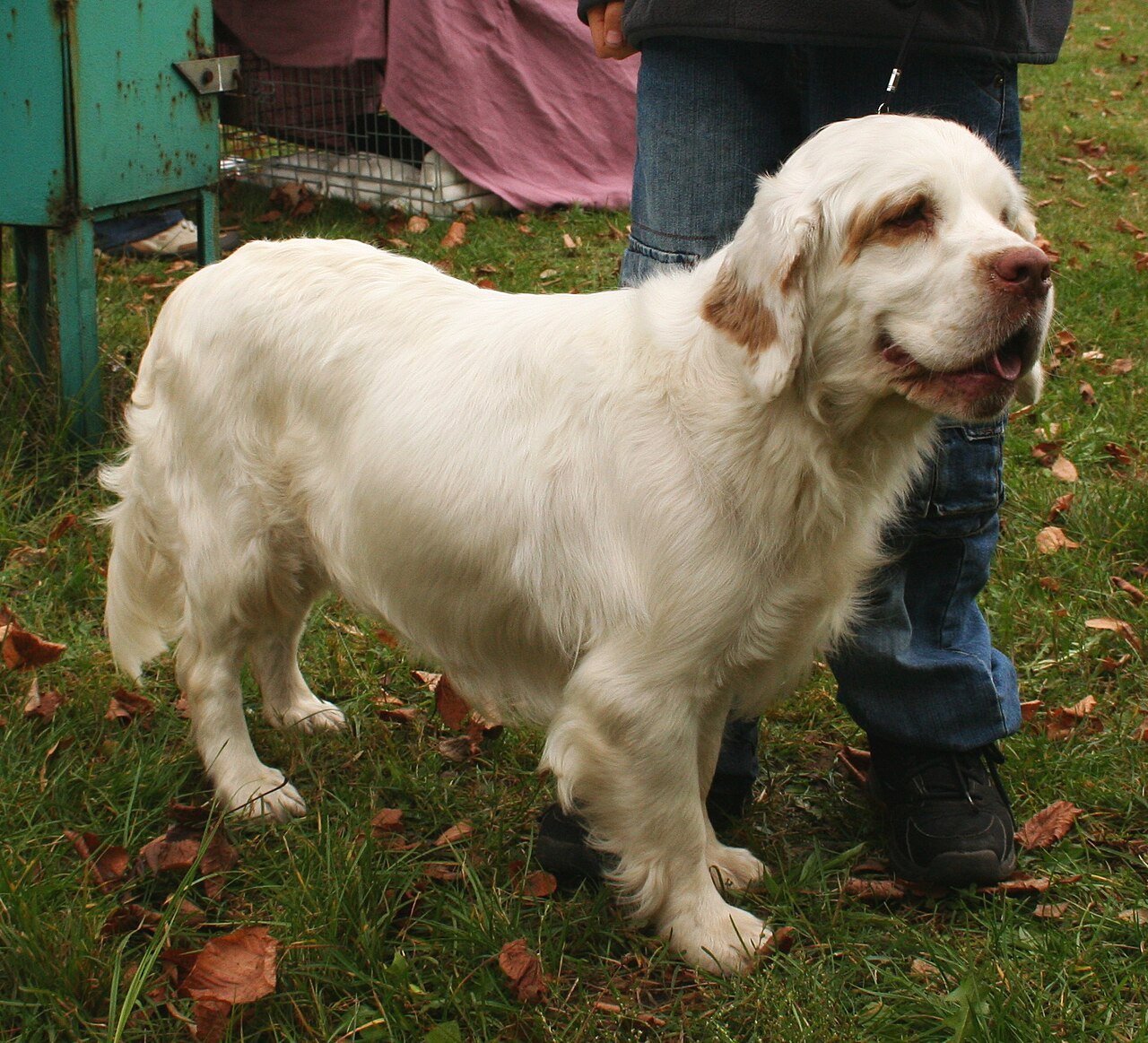
Ranges describe the registry profile, not a measurement, life expectancy, or health prediction for a particular dog. Separate sex or variety ranges are preserved where the source supplies them.
Source characteristics at a glance
The registry uses an ordinal 1–5 scale. A higher number indicates more of the named trait, not a better dog or a compatibility score. These descriptions are general and are not clinical measurements.
History and original work
The Clumber Spaniel's clearer recorded history begins around Clumber Park in England in the late eighteenth century. Earlier stories are tangled with folklore. It was developed as a substantial, methodical bird dog; its slower-looking outline should not be mistaken for an absence of interest in searching and retrieving.
Training & behavior
Allow time for a response, then reward a useful choice instead of repeating a cue more loudly. Teach a gentle retrieve and object exchange, preventing access to items that could be swallowed. Practice stepping onto a low stable surface for cooperative care. Children should not pull a resting dog's ears or use its patient appearance as permission to crowd it.
Daily needs & enrichment
Use searching walks, short retrieves on forgiving ground, and easy scent tasks. Keep body condition lean and increase distance gradually, avoiding repeated jumps and slippery stairs with a heavy, long-bodied dog. A change in willingness to move deserves attention rather than being labeled laziness. Let the dog rest between outings without removing exploration from its routine.
Coat care
Brush and use a medium-spaced comb once or twice weekly, checking ear fringes, belly, leg feathering, and hair at friction points. Inspect head folds and beneath the heavy ears; gently wipe dirty creases and dry them fully. Remove field debris before it tightens into knots.
Bathe as dirt and activity require, using dog shampoo and a complete rinse through the furnishings. Towel-blot and dry the roots and folds with comfortable moving air. Only limited foot or sanitary tidying is normally needed. Avoid a close body clip for convenience, scissors under skin-tight mats, or using fragrance to disguise an infected ear or sour fold.
Living Environment & Daily Needs
A Clumber needs comfortable space for its substantial body and time for walks and exploration. Plan household cleanup around shedding and drool, and assess access and handling rather than equating a softer pace with minimal care.
Practical question
Is reluctance to exercise always a normal Clumber trait?
No. A new change can reflect pain, metabolic disease, or another illness and should be assessed before trying to push fitness harder.
Plan care for the individual dog
Budget, time alone and household compatibility depend on the individual dog and your circumstances. Use our care budget guide, time-alone planning guide and questions before adopting alongside the breed-specific source information above.
Health questions for a veterinarian
Hip and elbow imaging, eye examinations, and a PDP1 DNA test are documented screening topics. PDP1 deficiency affects energy metabolism and can cause marked exercise intolerance; a normal DNA result excludes neither joint disease nor other causes of weakness. Eyelid abnormalities may irritate the eye, while the long body makes back or neck pain worth prompt attention. Sudden weakness or inability to walk is urgent. Persistent ear or skin problems also merit assessment, including underlying causes rather than repeated surface cleaning alone.
Editorial update: October 24, 2026. General information; individual care requires veterinary assessment. No veterinary review is claimed. See our Editorial Policy for sourcing and review practices.