Ranges describe the registry profile, not a measurement, life expectancy, or health prediction for a particular dog. Separate sex or variety ranges are preserved where the source supplies them.
Source characteristics at a glance
The registry uses an ordinal 1–5 scale. A higher number indicates more of the named trait, not a better dog or a compatibility score. These descriptions are general and are not clinical measurements.
History and original work
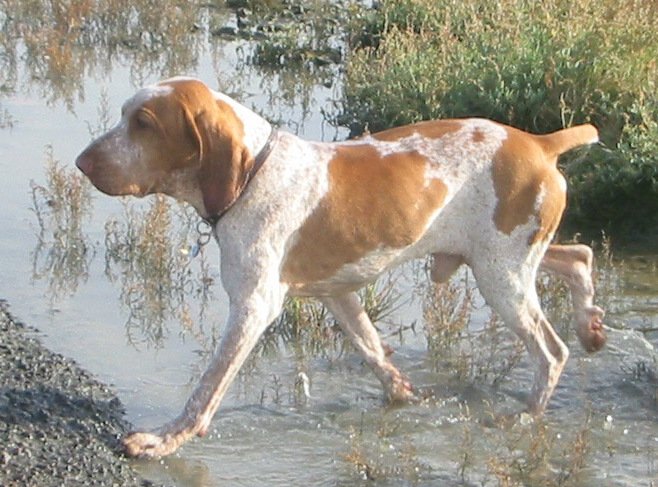
The Bracco Italiano is an Italian pointing dog whose development is associated with northern Italy, especially Piedmont and Lombardy. Historical accounts describe regional color and build differences that contributed to the modern breed. Exact ancient crosses are uncertain. Its long ears and deliberate expression accompany a capable bird dog bred to search, point, and retrieve.
Training & behavior
Use a calm cue and reward the correct response before increasing distance or distractions. Teach delivery of a dummy gently, without wrestling objects out of the mouth. Practice waiting at doors and walking without pulling before the dog reaches full strength. Reward contact with you during field-style searching; a handler can provide direction without suppressing the dog's willingness to investigate.
Daily needs & enrichment
Offer varied walks, searching for a hidden dummy, and gradually conditioned field outings. Bracchi can have substantial endurance, but growing joints need protection from repeated hard landings and forced running on pavement. Choose forgiving surfaces and allow breaks. After outdoor work, inspect feet and the long ears for plant material, and make quiet recovery part of the routine.
Coat care
Use a soft brush or rubber grooming mitt on the short coat, with gentle pressure over the head and finer hair. Wipe mud from the underside and inspect the long ear flaps and skin around the mouth. No routine body clipping is needed. Keep nails short enough that they do not distort the dog's stance.
An occasional bath removes dirt that brushing leaves behind. Keep dog shampoo and rinse water out of the eyes and ear canals, rinse the body thoroughly, and towel-dry the skin beneath the ears as well as the back. Let any remaining damp coat dry in comfortable conditions. Avoid cotton swabs deep in the ears or frequent medicated cleaning without a veterinary plan; odor and discharge may require treatment.
Living Environment & Daily Needs
A Bracco Italiano needs purposeful activity despite a relaxed expression at home. Check resting space and transport for the actual dog, and identify regular opportunities for movement and shared training beyond access to a yard.
Practical question
Why request both blood and urine kidney results?
They provide different information about filtration and protein loss. A routine blood panel alone may not answer the questions raised by a family history of kidney disease; a veterinarian should interpret the results together.
Plan care for the individual dog
Budget, time alone and household compatibility depend on the individual dog and your circumstances. Use our care budget guide, time-alone planning guide and questions before adopting alongside the breed-specific source information above.
Health questions for a veterinarian
Joint imaging checks hips and elbows; ophthalmologist examinations assess eyelid problems and other eye disease. Kidney screening is particularly relevant: the club's 2025 statement discusses blood creatinine and urine protein measurements because renal disease, including amyloidosis, is a concern. A normal result at one date cannot guarantee lifelong kidney health. Increased thirst, altered urination, weight loss, or reduced appetite deserves investigation. The breed's deep chest also makes emergency recognition of gastric dilatation-volvulus important: repeated unproductive retching, a distended abdomen, or sudden distress needs immediate care.
Editorial update: October 24, 2026. General information; individual care requires veterinary assessment. No veterinary review is claimed. See our Editorial Policy for sourcing and review practices.