Displayed with responsive cropping.
Ranges describe the registry profile, not a measurement, life expectancy, or health prediction for a particular dog. Separate sex or variety ranges are preserved where the source supplies them.
Source characteristics at a glance
The registry uses an ordinal 1–5 scale. A higher number indicates more of the named trait, not a better dog or a compatibility score. These descriptions are general and are not clinical measurements.
History and physical characteristics
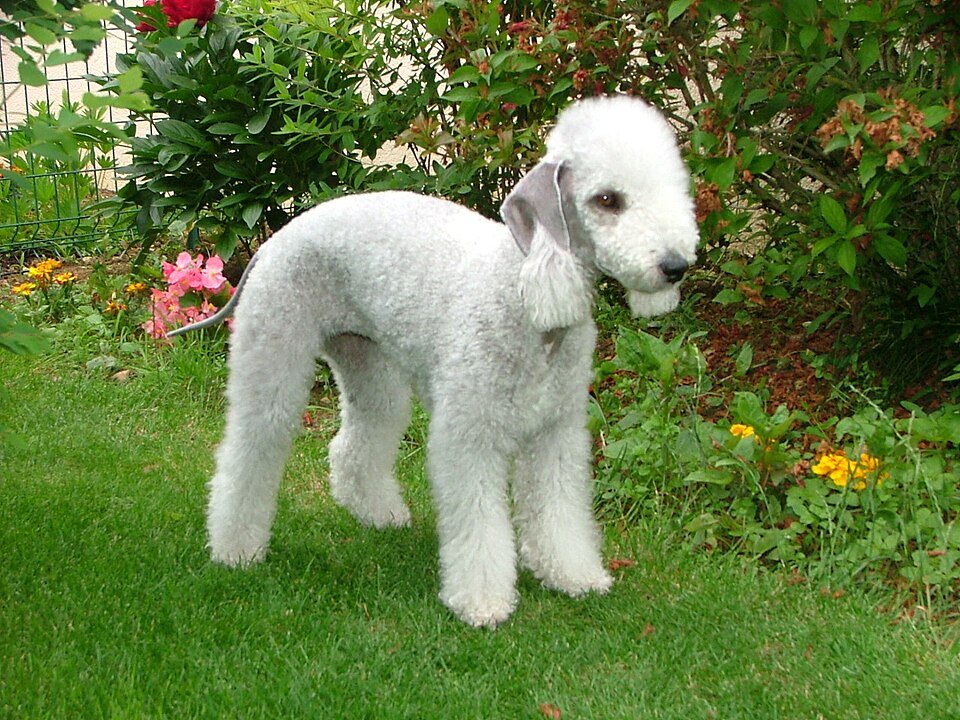
The Bedlington takes its name from the Northumberland town where this versatile working terrier became established. Ratting and hunting small game were part of its background before its distinctive trim and companion role became better known. The gentle outline should not be mistaken for an absence of terrier pursuit interests.
The arched back and narrow head contribute to a lamb-like silhouette, but the coat combines softer and harsher hair rather than a conventional wiry jacket. Grooming preserves that practical distinction; it is not a reason to apply a wire-terrier stripping routine.
Temperament and training
The Bedlington's gentle appearance can hide a terrier's persistence and interest in pursuit. Teach a release cue and calm behavior around moving distractions through rewarding practice. Rough corrections can turn cooperation into conflict. Supervise introductions to small pets and give children clear rules for respectful handling.
Daily needs & enrichment
Offer walks with time to investigate, active games, and short skills sessions. Secure running or suitable dog sports can engage the athlete beneath the distinctive trim. Build in a stopping point and quiet recovery; chasing wildlife is not a necessary outlet for terrier energy.
Coat care
Brush and comb once or twice weekly, lifting small sections and checking the roots behind the ears, under the elbows, belly, and legs. Use a soft slicker or suitable pin brush, then a metal comb to find remaining tangles without pulling. Hair grows continuously, so arrange clipping and shaping roughly every two months, adjusted to the chosen trim.
Remove small tangles before bathing, rinse dog shampoo completely, and dry the roots with comfortable airflow while gently separating the coat. Ask a breed-experienced groomer to demonstrate the head and ear trim. Avoid routine hand-stripping, scissors beneath tight mats, and assuming a neat outer silhouette means the skin underneath is comfortable.
Living Environment & Daily Needs
Leave time for active outings and training with a Bedlington, followed by a comfortable place close to familiar people. Its distinctive coat requires a workable grooming routine; a gentle-looking outline does not reduce those commitments.
Care through life stages
Introduce puppies to clippers, standing on a nonslip surface, and gentle face and ear handling in short rewarded sessions. Keep adult conditioning separate from the grooming schedule. For seniors, adapt the length of standing sessions and investigate appetite, weight, mobility, or grooming-tolerance changes instead of attributing them to a fussy terrier.
Frequently asked questions
Does the show trim have to be maintained for a pet? A practical pet trim can be discussed with a groomer. It still needs regular root-level combing and safe attention to the feet, face, and ears; shortening the outline does not remove the maintenance commitment.
Questions to ask before choosing a dog
Which copper-related variants were tested, and what follow-up does the veterinarian recommend? Ask for knee and eye records, a demonstration of coat care, and observations of this dog's response to small animals and grooming restraint.
Plan care for the individual dog
Budget, time alone and household compatibility depend on the individual dog and your circumstances. Use our care budget guide, time-alone planning guide and questions before adopting alongside the breed-specific source information above.
Health questions for a veterinarian
Copper-associated liver disease is a significant breed concern. Ask which copper-toxicosis test was used and review the actual laboratory result. A clear result for a tested variant does not exclude every cause of copper accumulation or liver disease. Discuss any further investigation, diet, or supplements with a veterinarian rather than starting a restricted diet on your own.
The breed club also recommends patellar evaluation, which assesses kneecap stability, and an ophthalmologist examination for inherited eye concerns. These evaluate different problems from the copper test. Request identifiable reports and follow-up advice. Persistent lameness, loss of appetite, unexplained weight change, or unusual tiredness deserves assessment rather than reassurance from parental screening alone.
Updated October 25, 2026. General information; see our Editorial Policy for sourcing and review practices.