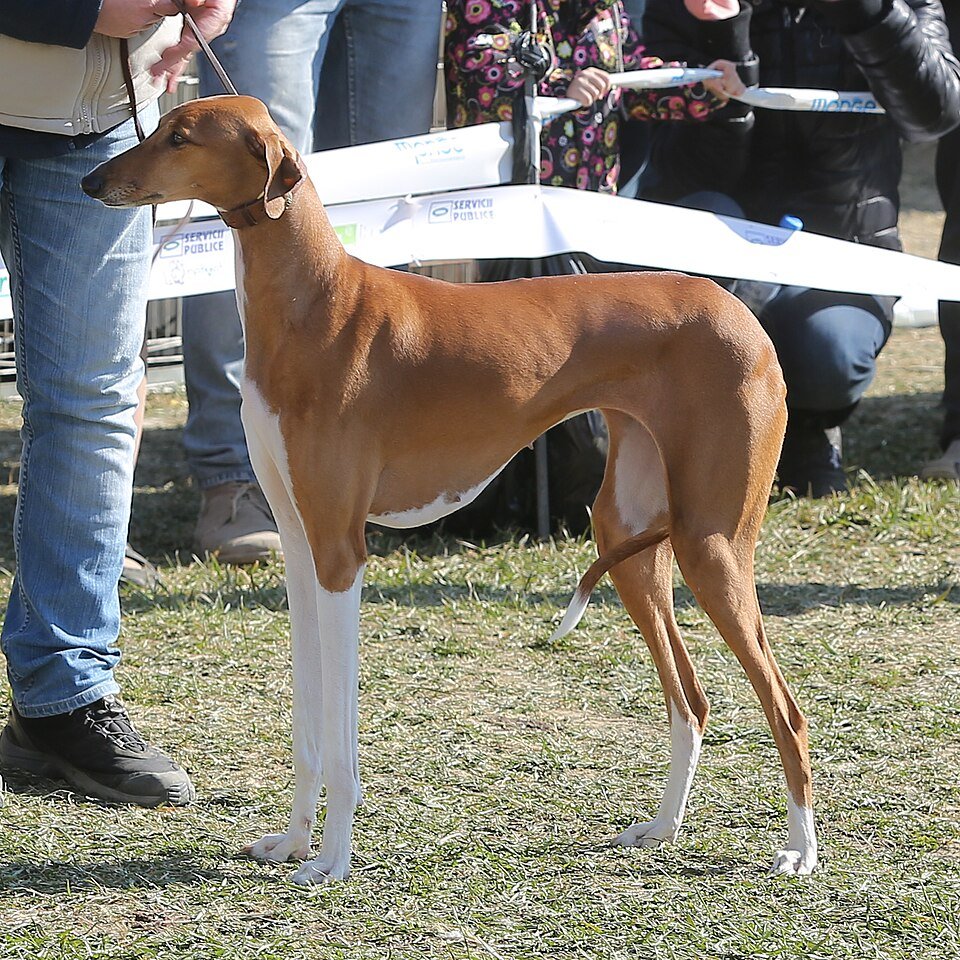
Displayed with responsive cropping.
Ranges describe the registry profile, not a measurement, life expectancy, or health prediction for a particular dog. Separate sex or variety ranges are preserved where the source supplies them.
Source characteristics at a glance
The registry uses an ordinal 1–5 scale. A higher number indicates more of the named trait, not a better dog or a compatibility score. These descriptions are general and are not clinical measurements.
History and original work
The Azawakh comes from the Sahel region of West Africa, especially the area around the Azawakh Valley in Mali and Niger. Tuareg and other local communities valued these dogs as hunting companions and camp guardians. Their regional history is richer than a single modern border or an assumption that every slender sighthound developed for the same work.
Temperament and training
Expect reserve to require respect, not an effort to make every stranger touch the dog. Reward voluntary attention, allow space during introductions, and teach handling in quiet, predictable steps. Guarding and pursuit can coexist with close family affection. Children and visitors need clear ways to leave resting space undisturbed, and relationships with smaller animals require careful individual assessment.
Daily needs & enrichment
Combine exploratory walks with suitable enclosed running and shared games that encourage movement without pressure. Check the enclosure before release, and introduce more demanding running gradually as the dog matures and conditions. Some dogs engage more readily with a familiar person or compatible dog than when left outside alone. Provide comfortable recovery rather than making sprinting an endurance test.
Coat care
A soft mitt or brush is appropriate for the very fine, short coat; vigorous raking is unnecessary. Check skin and feet after rough-ground outings and keep bedding comfortable for a lean dog. Adapt exposure to wet or cold conditions to the individual's comfort rather than relying on a universal temperature limit. The coat's simplicity does not eliminate the need for cooperative foot and skin checks.
Use a soft bristle brush or mitt about weekly. Dry mud may brush away without a bath; bathe for actual soiling, rinse fully, and towel dry comfortably. Avoid vigorous raking, unnecessary clipping, and chilling a lean short-coated dog.
Living Environment & Daily Needs
Give an Azawakh comfortable resting space, regular activity, and room for relationships to develop without pressure. Plan household visitors around the individual's reserved social style rather than assuming an affectionate bond extends to everyone.
Care through life stages
Puppies need gentle handling and unforced social experiences, with secure movement suited to development. Condition adult running gradually. Seniors may need more supportive bedding and easier footing; weight loss, weakness, or difficulty eating warrants veterinary assessment.
Frequently asked questions
Does a visibly lean outline mean weight loss can be ignored? No. Learn the individual’s normal condition and have an ongoing loss or change assessed. Breed shape is not an explanation for every change in appetite or body condition.
Questions to ask before choosing a dog
Can you meet a mature Azawakh and see how introductions and gentle handling are managed? Ask about seizures, thyroid disease, immune illness, and actual clinical records in the family. Consider whether everyone will respect a reserved dog's space while providing shared activity and secure running. Judge condition against the individual's history rather than trying to make the dog resemble a heavier breed.
Plan care for the individual dog
Budget, time alone and household compatibility depend on the individual dog and your circumstances. Use our care budget guide, time-alone planning guide and questions before adopting alongside the breed-specific source information above.
Health questions for a veterinarian
The breed association documents seizures, hypothyroidism, and several immune-mediated conditions, including masticatory myositis. These reports identify concerns for family-history discussions, not reliable breed-wide frequencies. Masticatory myositis affects chewing muscles; difficulty opening the mouth or new wasting around the head deserves veterinary assessment. Thyroid disease requires appropriate clinical testing, and a general DNA-clear claim does not exclude seizures or immune disease. Ask what was actually examined and what illnesses occurred in mature relatives. A naturally lean Azawakh may show bony landmarks, but ongoing weight loss or a change from the dog's usual condition should not be dismissed as normal breed shape. Seek prompt help for seizures, weakness, or difficulty eating.
Updated October 25, 2026. General information; see our Editorial Policy for sourcing and review practices.